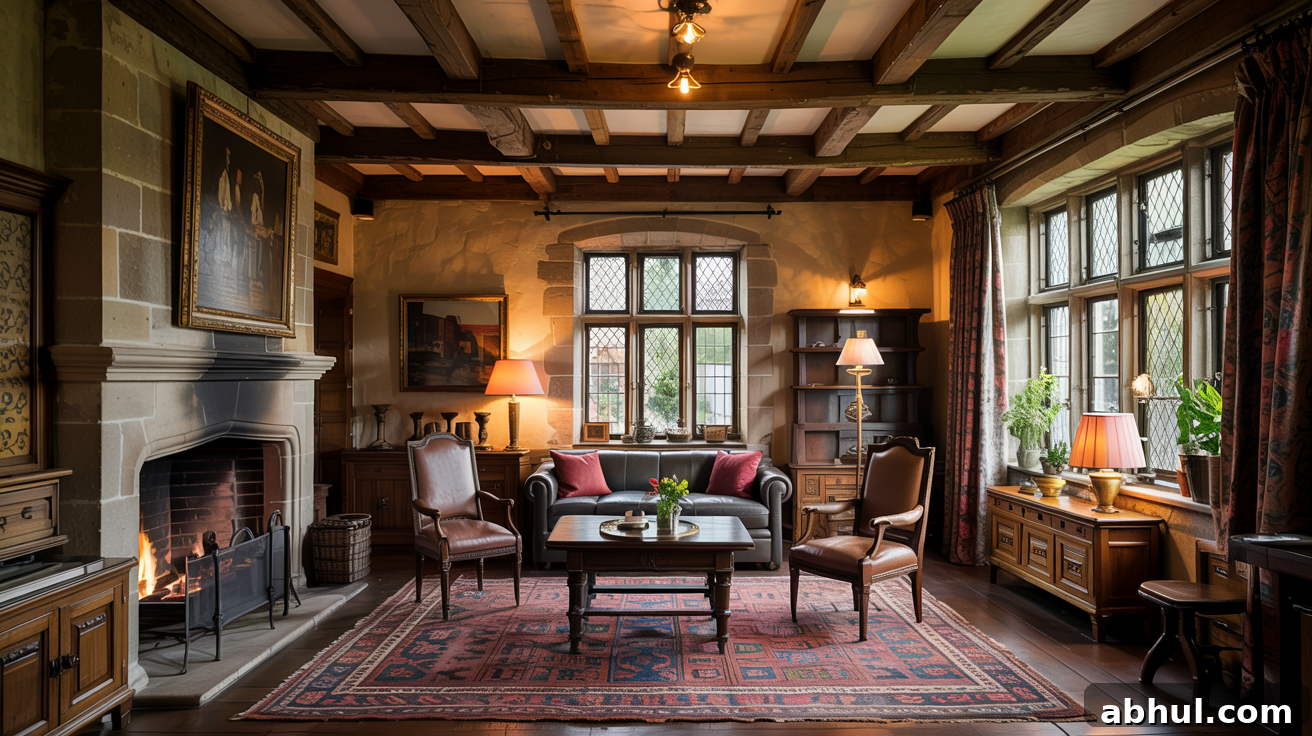
Old houses have a way of slowing you down and creating an emotional response. Tudor Revival interiors do this especially well: dark timber beams, large stone fireplaces, and cozy, intimate rooms combine to create a calm, grounded atmosphere.
This guide will help you:
- Recognize the defining features of Tudor Revival interiors
- Apply the style practically in each room of your home
- Modernize the look while preserving its historic charm
More homeowners are embracing this aesthetic because it feels timeless and reassuring. Below are clear, practical suggestions to bring Tudor Revival character into a modern home.
Let’s begin with the essentials.
What is a Tudor Revival Interior?
Tudor Revival interiors draw on medieval English building traditions and became popular in the United States in the early 20th century. These homes were designed to look historic while offering modern comfort. The style emphasizes texture, craftsmanship, and cozy, layered spaces.
Key Elements of Tudor Revival Interior Design
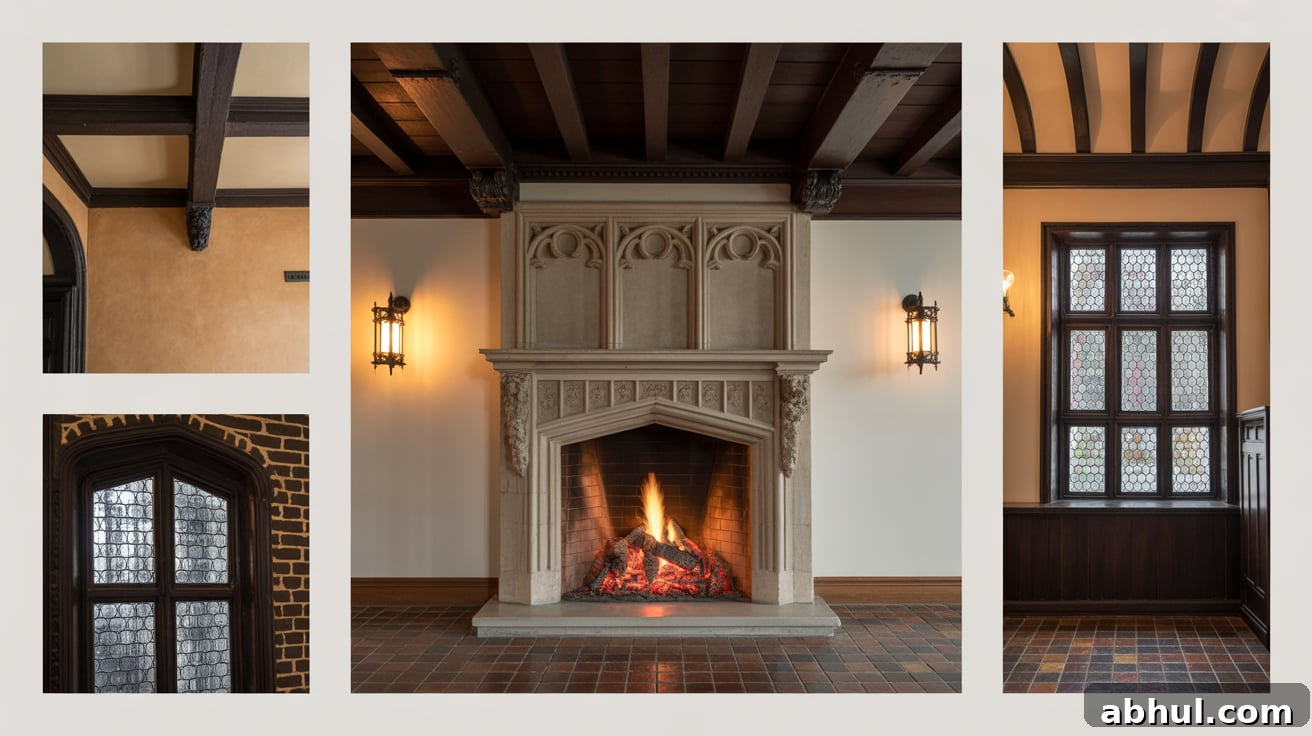
Several recurring elements define the Tudor Revival look. Together they create the warm, story-filled feeling of these interiors:
- Exposed wood beams and paneling: Dark timber on ceilings and walls anchors rooms and adds warmth.
- Large stone fireplaces: Often a focal point, fireplaces give rooms a sense of permanence and comfort.
- Plaster or stucco walls: Slightly uneven finishes add texture and soften the overall palette.
- Leaded-glass windows: Small panes or leaded details cast gentle light and offer subtle ornament.
- Patterned brick or wood floors: Traditional floor patterns give visual interest and a connection to the past.
Color Palettes & Materials for Tudor Revival
Classic Tudor Revival colors include deep greens, burgundy, stone grays, and dark oak tones. If that feels heavy, a modern approach mixes these richer hues with warm whites, soft grays, and muted browns to brighten rooms while keeping the style’s mood.
Using reclaimed wood for accent walls or faux beams can maintain authenticity on a budget. Mix natural materials—timber, stone, and textured plaster—to keep the look layered and tactile.
Modernizing Tudor Interiors Without Losing Class
You can keep Tudor character while creating lighter, more open spaces. Focus on balance:
- Open up the plan where it makes sense, preserving key elements such as original beams or door frames to retain character.
- Lighten heavy wood tones with neutral walls and pale textiles—white, cream, and soft beige can brighten without erasing character.
- Combine clean-lined, contemporary furniture with a few vintage or period pieces. Modern lighting, simple art, or a single bold accessory can refresh the room.
Tudor Revival Room-by-Room Ideas
Here are practical suggestions for each room so you can adapt Tudor Revival features to everyday living.
1. Living Room
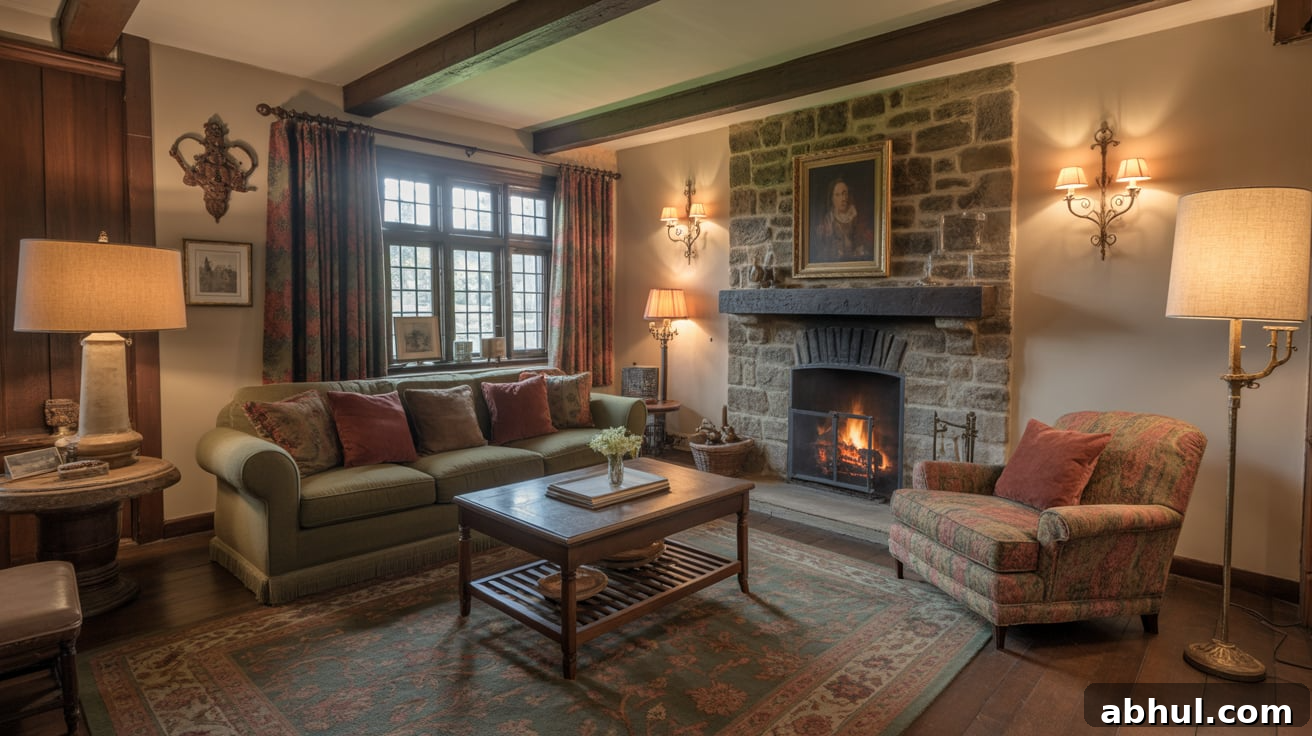
Let the fireplace be the heart of the living room. Arrange seating to face the hearth and create a warm conversational zone. A balanced layout with armchairs flanking the fire and a substantial sofa works well.
Use heavy curtains in earthy tones, layered rugs with subtle patterns, and warm, dimmable lighting—iron sconces or lamps with linen shades help maintain a soft, inviting glow.
2. Kitchen Updates
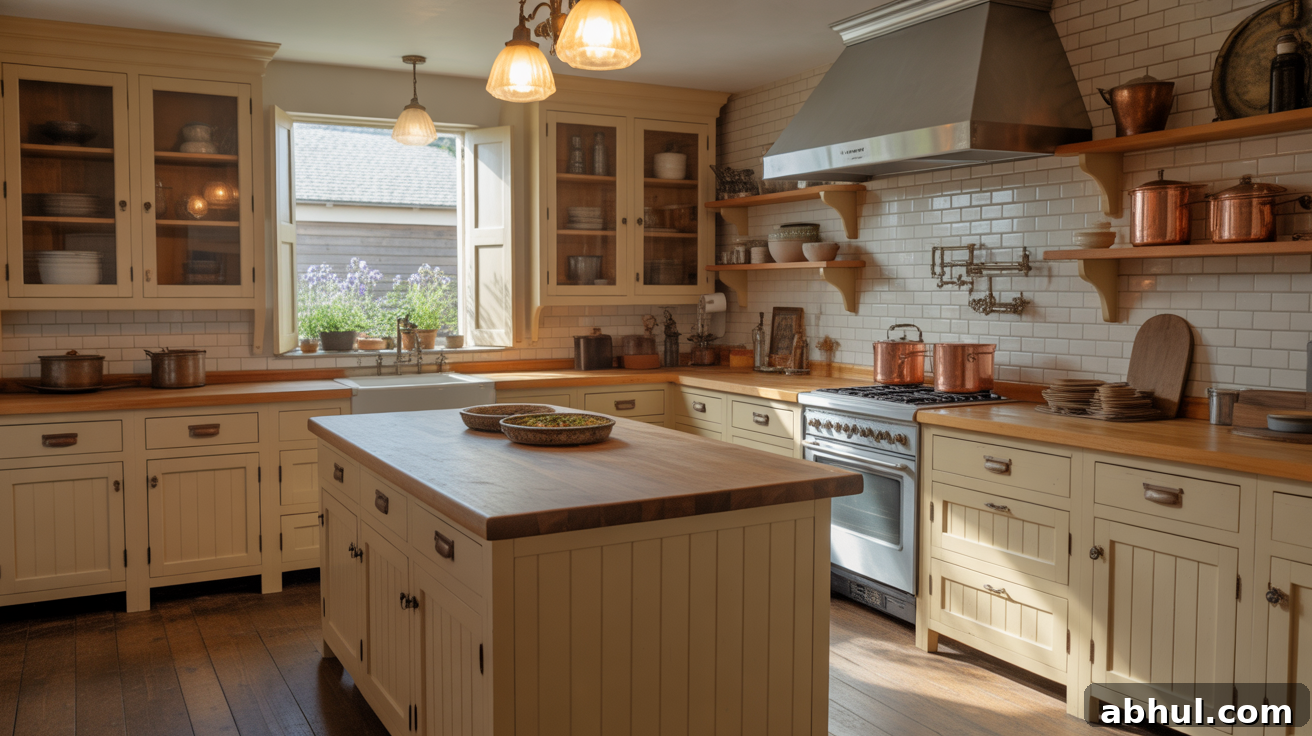
Shaker-style cabinets in cream, sage, or charcoal suit the Tudor look. Warm metal hardware—copper, oil-rubbed bronze, or brushed brass—adds period-appropriate warmth. Keep backsplashes simple with off-white or ivory subway tile, and include open wooden shelving to display stoneware and practical items.
A butcher-block island or table reinforces the homey, functional feel common in older houses.
3. Bathrooms
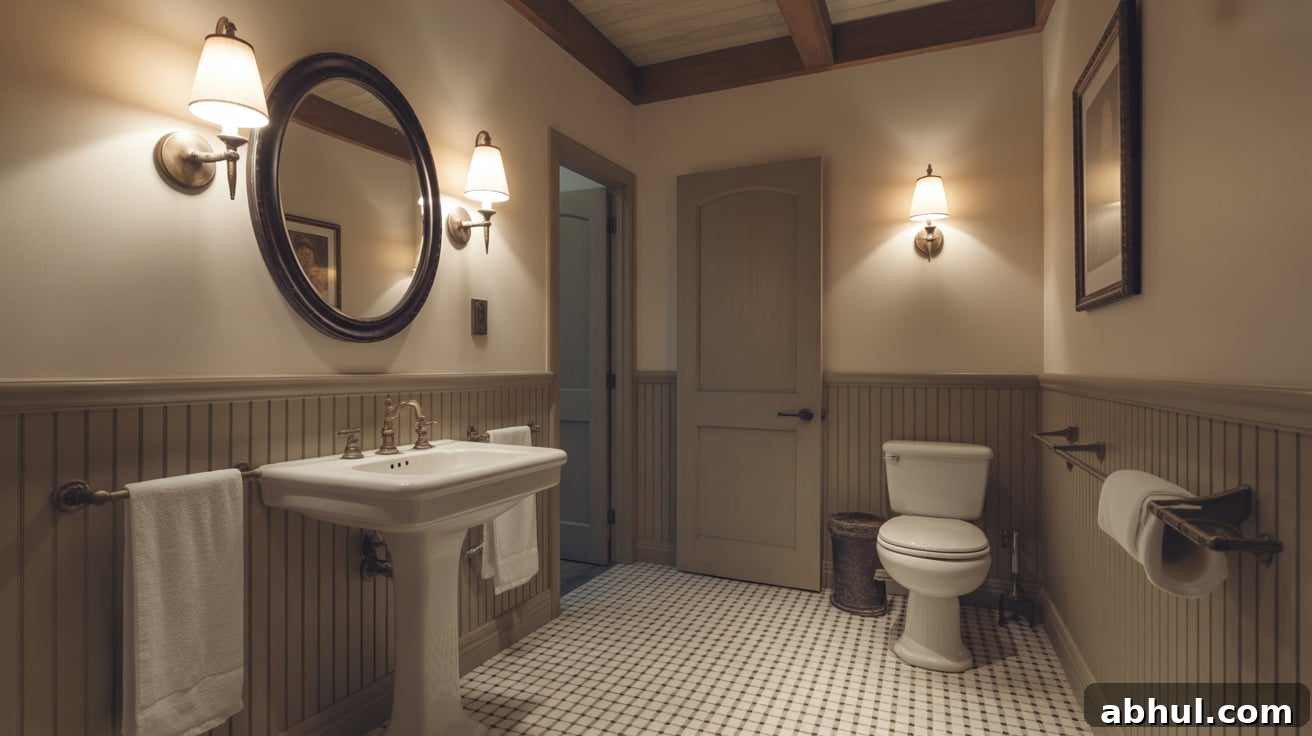
Pedestal sinks and modest vanities keep small bathrooms feeling open. Classic black-and-white floor tiles—checkerboard or herringbone—add vintage charm. Choose fixtures with slightly aged finishes and rounded or oval mirrors in dark metal or wood frames. Add texture with wainscoting or an exposed beam and warm, soft lighting.
4. Bedrooms
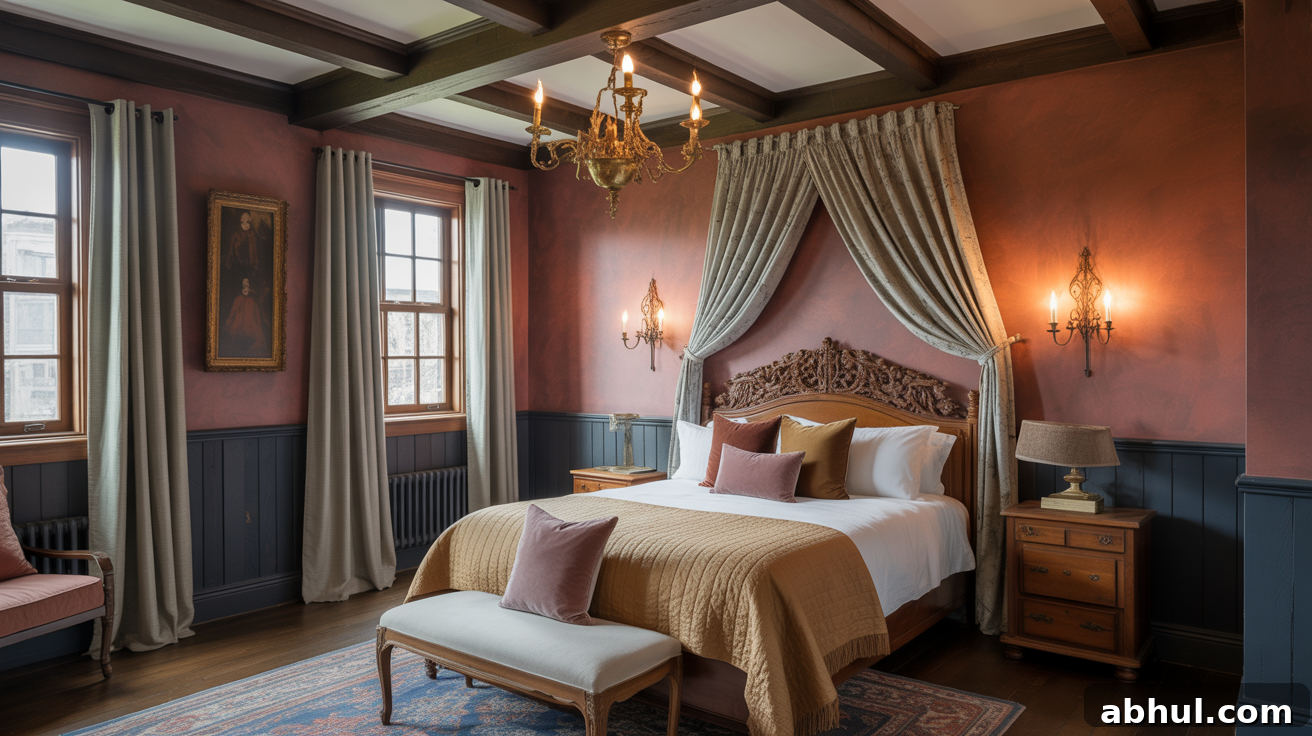
Deep, calming wall colors—navy, warm gray, or muted ochre—create a restful atmosphere. A four-poster or canopy bed provides a strong focal point. Select wooden furniture with visible grain and simple lines, layer textured wallpapers or fabric panels behind the bed, and use soft textiles—linen sheets, wool throws, and velvet cushions—to balance the room’s weight.
5. Libraries & Studies
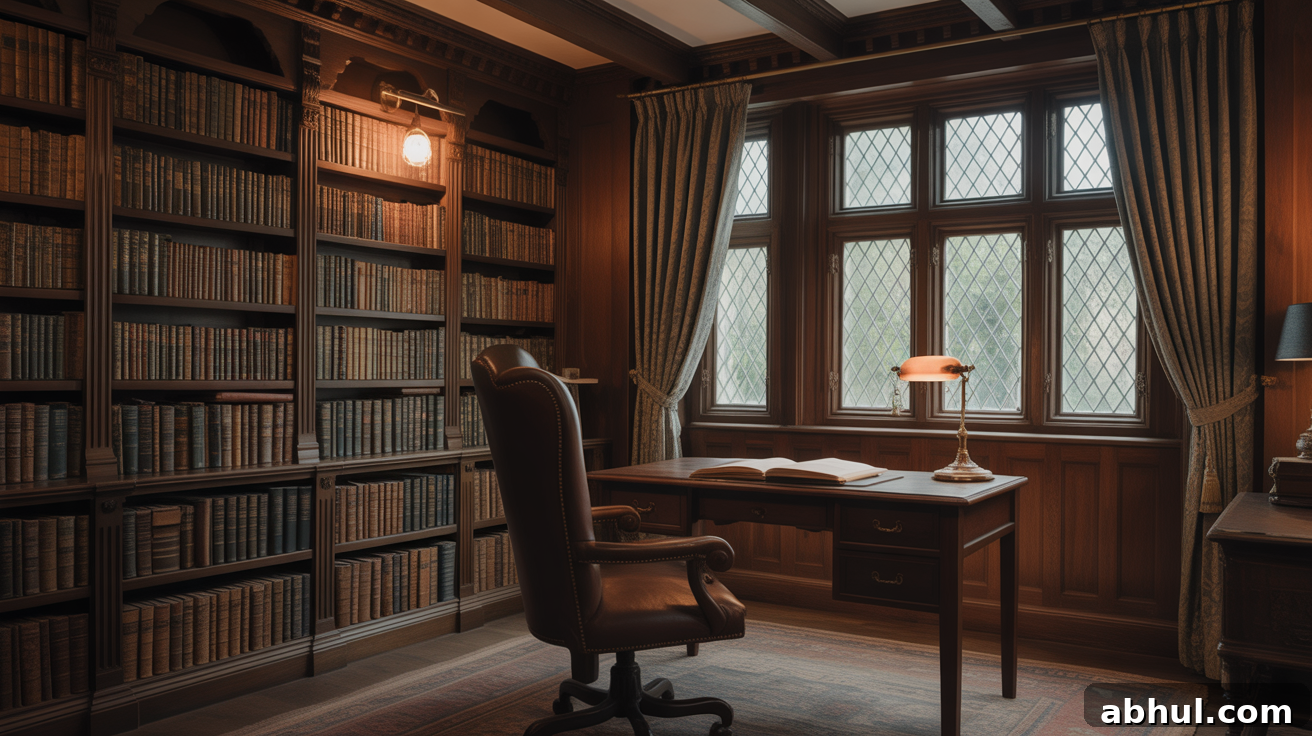
Built-in bookshelves in dark-stained wood or painted deep tones give studies a moody, refined feel. Furnish with a tufted leather chair or a high-backed velvet seat and position it near a window for reading. A traditional desk with a metal-shaded lamp completes the room while keeping the palette subdued and contemplative.
Style Comparison: Tudor Revival vs. Other Similar Designs
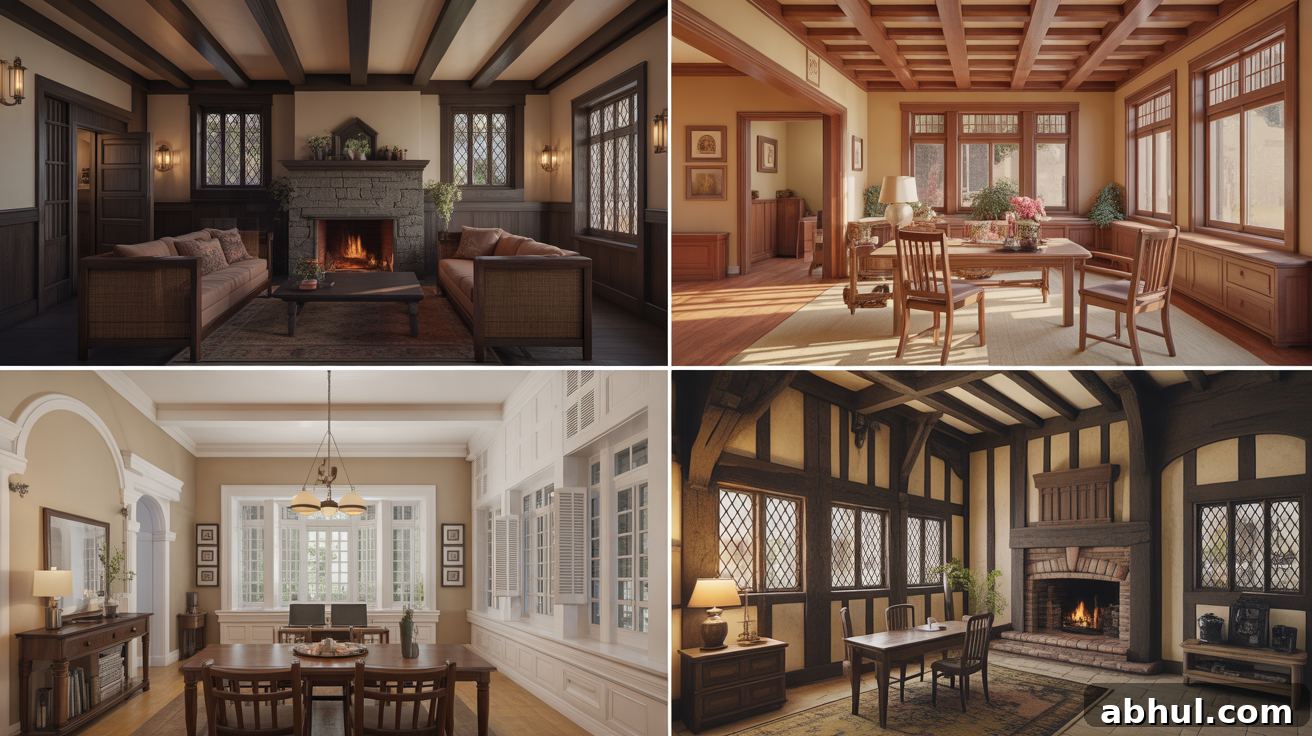
| Comparison | Tudor Style | Arts & Crafts Style | Colonial Style | Original Tudor (Historic) |
|---|---|---|---|---|
| Main Focus | Decorative, dramatic atmosphere | Simplicity and honest craftsmanship | Symmetry and formal balance | Practical construction for medieval life |
| Detail Level | Heavy woodwork and textured finishes | Handmade details with cleaner lines | Subtle, balanced ornament | Structural honesty and local materials |
| Layout Feel | Asymmetrical and cozy | Functional and grounded | Formal and orderly | Arranged for historic needs |
| Color & Tone | Deep, earthy tones | Natural materials and muted tones | Lighter shades and crisp trim | Determined by available materials |
| Materials | Brick, timber, stone | Wood, stone, handcrafted tiles | Wood siding, brick, clean surfaces | Local stone, plaster, timber |
| Windows & Doors | Leaded glass and arched shapes | Practical rectangular openings | Shuttered windows and centered doors | Small panes with iron fittings |
| Design Intent | Create mood and depth | Highlight craft and purpose | Reflect classical proportion | Built for function and defense |
Tudor Revival on a Budget
You can introduce Tudor touches without a large budget. Affordable options include peel-and-stick wallpaper that mimics wood or plaster, secondhand furniture with turned wood details, vintage-style light fixtures, or framed leaded-glass panels added to doors or windows. Even a single well-chosen element—like a statement light or reclaimed beam—can change a room’s character.
Helpful Tips That Work
Before renovating, consider these practical guidelines to preserve a home’s original beauty while making thoughtful updates:
- Keep a few original dark wood features rather than painting everything—these anchors convey authenticity.
- If you open up rooms, try to retain door frames, beams, or other architectural elements for continuity.
- Avoid fads that clash with the home’s age; introduce modern pieces gradually to maintain balance.
Overall, aim for warmth, honesty, and layers of texture that honor the home’s character.
Conclusion
Tudor Revival interiors deliver a sense of history, comfort, and depth. By focusing on key elements—timber details, stone, textured walls, and rich color—you can create rooms that feel lived-in and personal. You don’t need to replicate the past exactly; blend authentic touches with modern conveniences to achieve a warm, rooted home that works for contemporary life.