Recipe Overview
Why you’ll love it: This Americanized kung pao shrimp balances savory and sweet with a gentle spicy heat. It uses easy-to-find ingredients and delivers the takeout flavors you crave at home.
How long it takes: 30 minutes
Equipment you’ll need: large skillet or wok, mixing bowl
Servings: 4
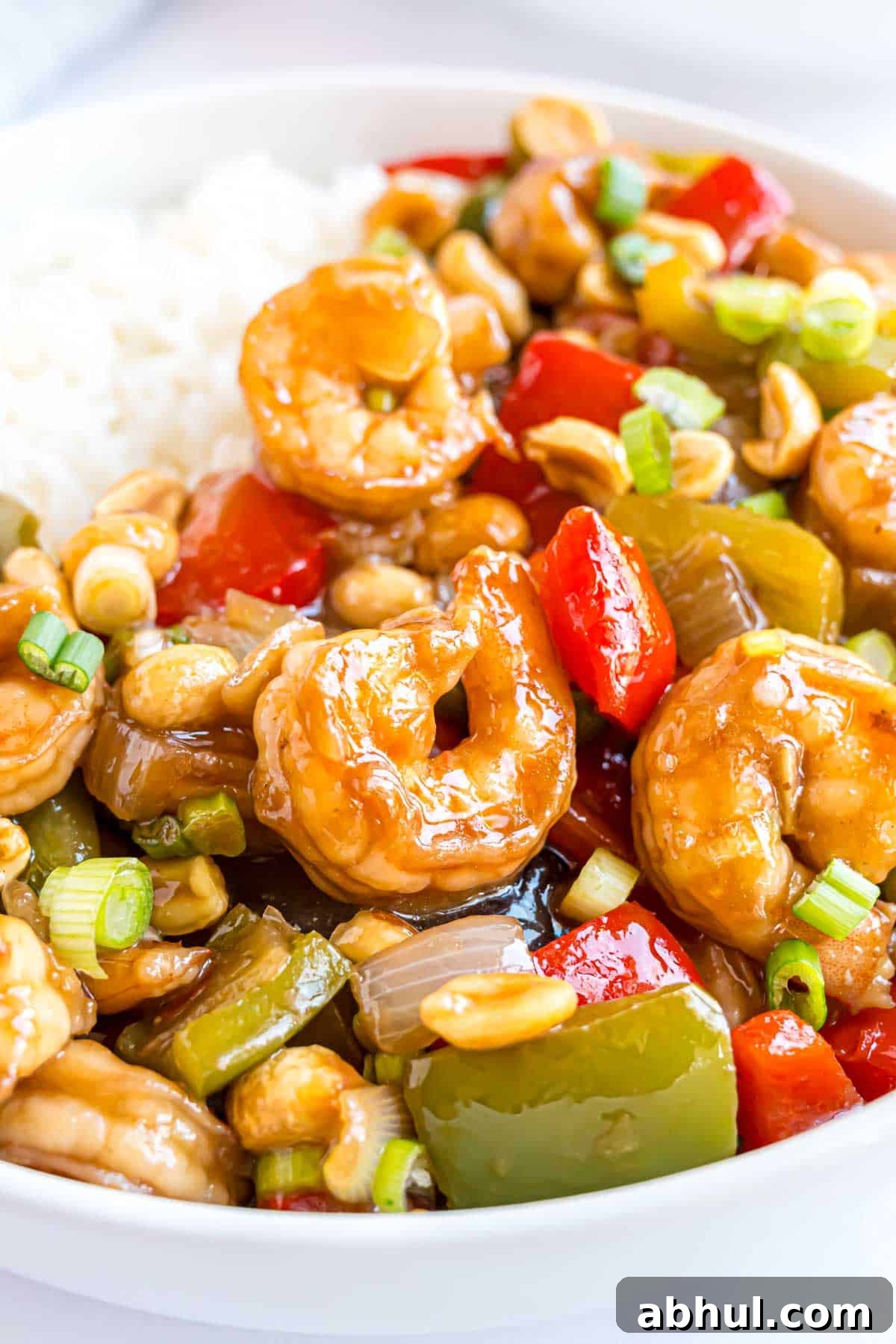
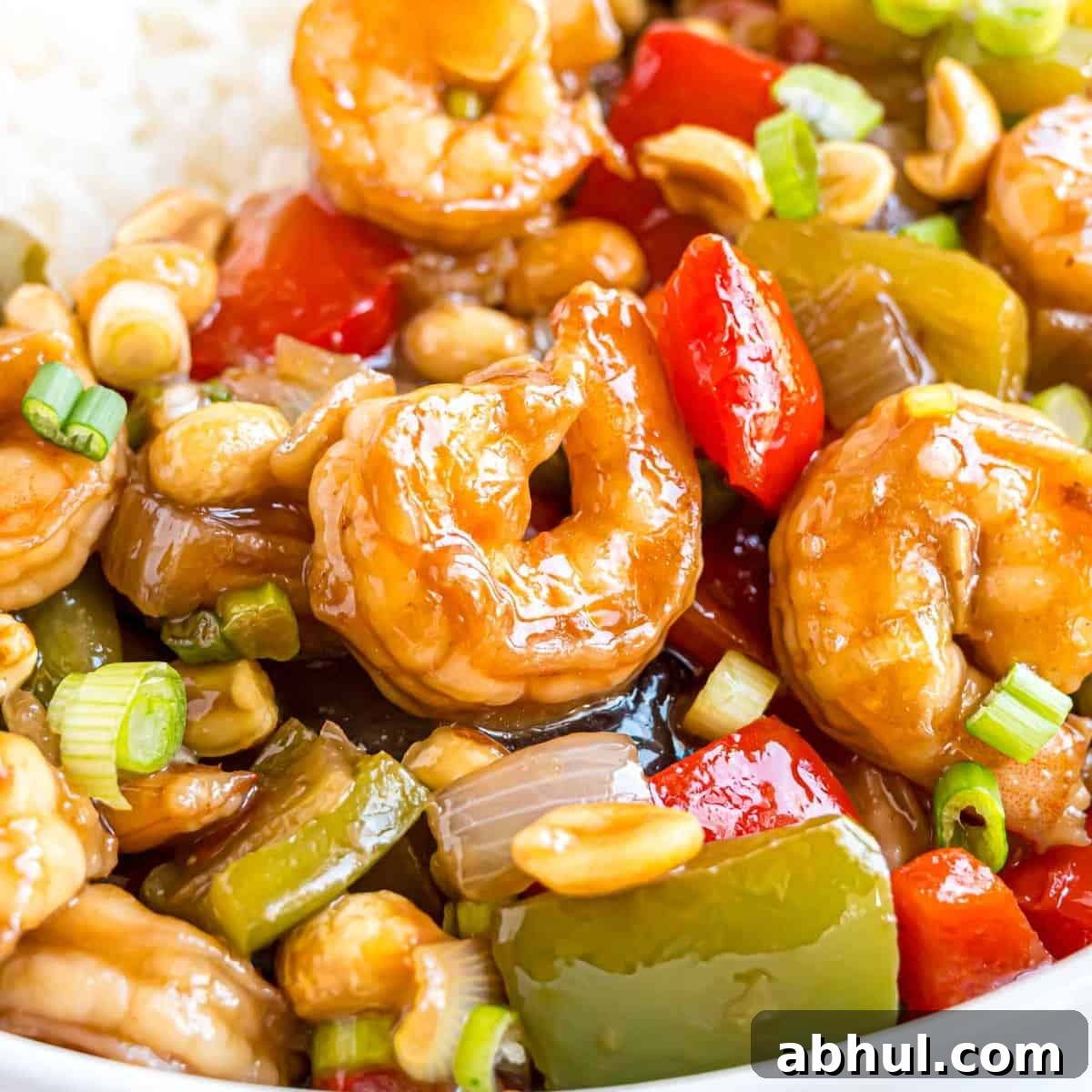
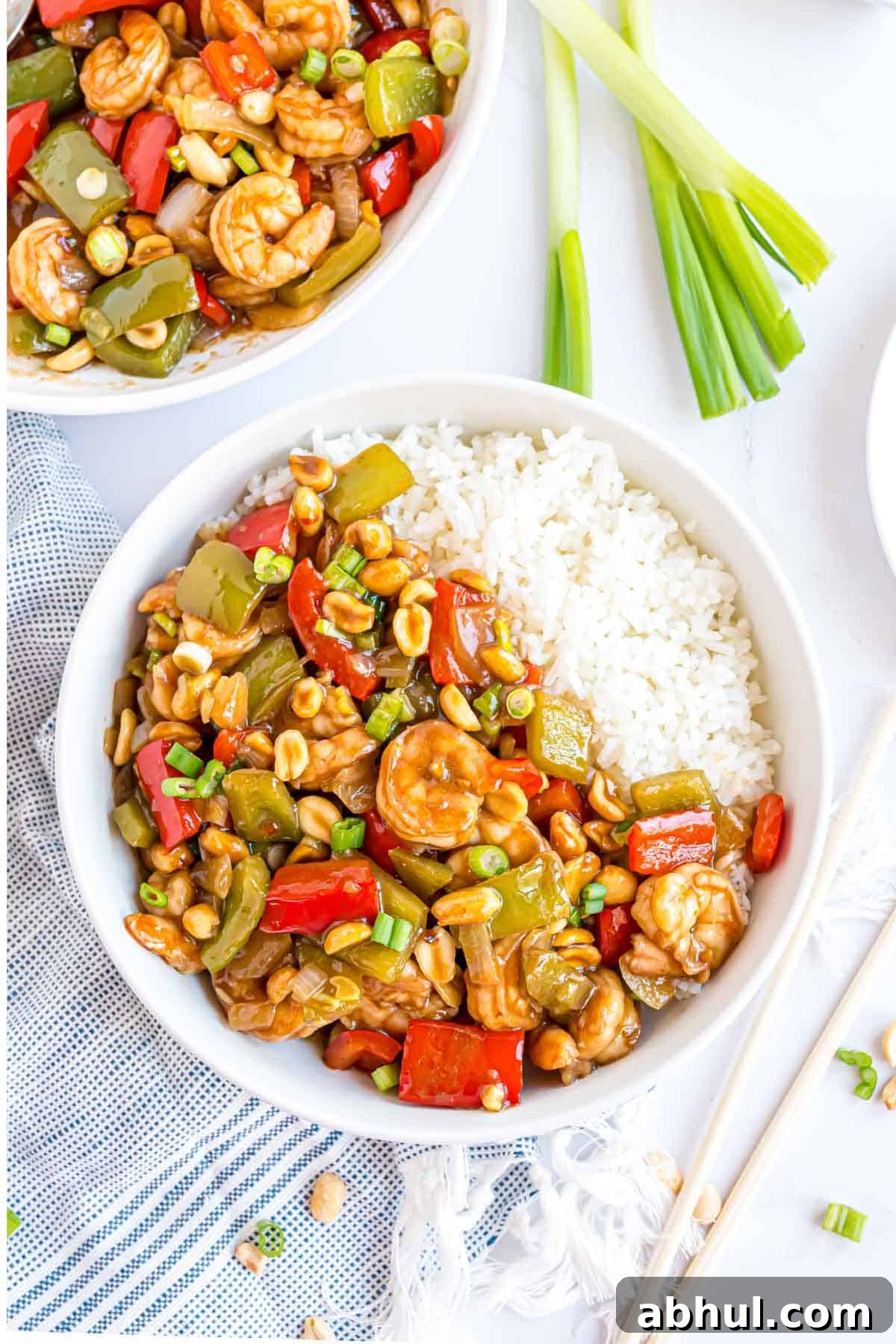
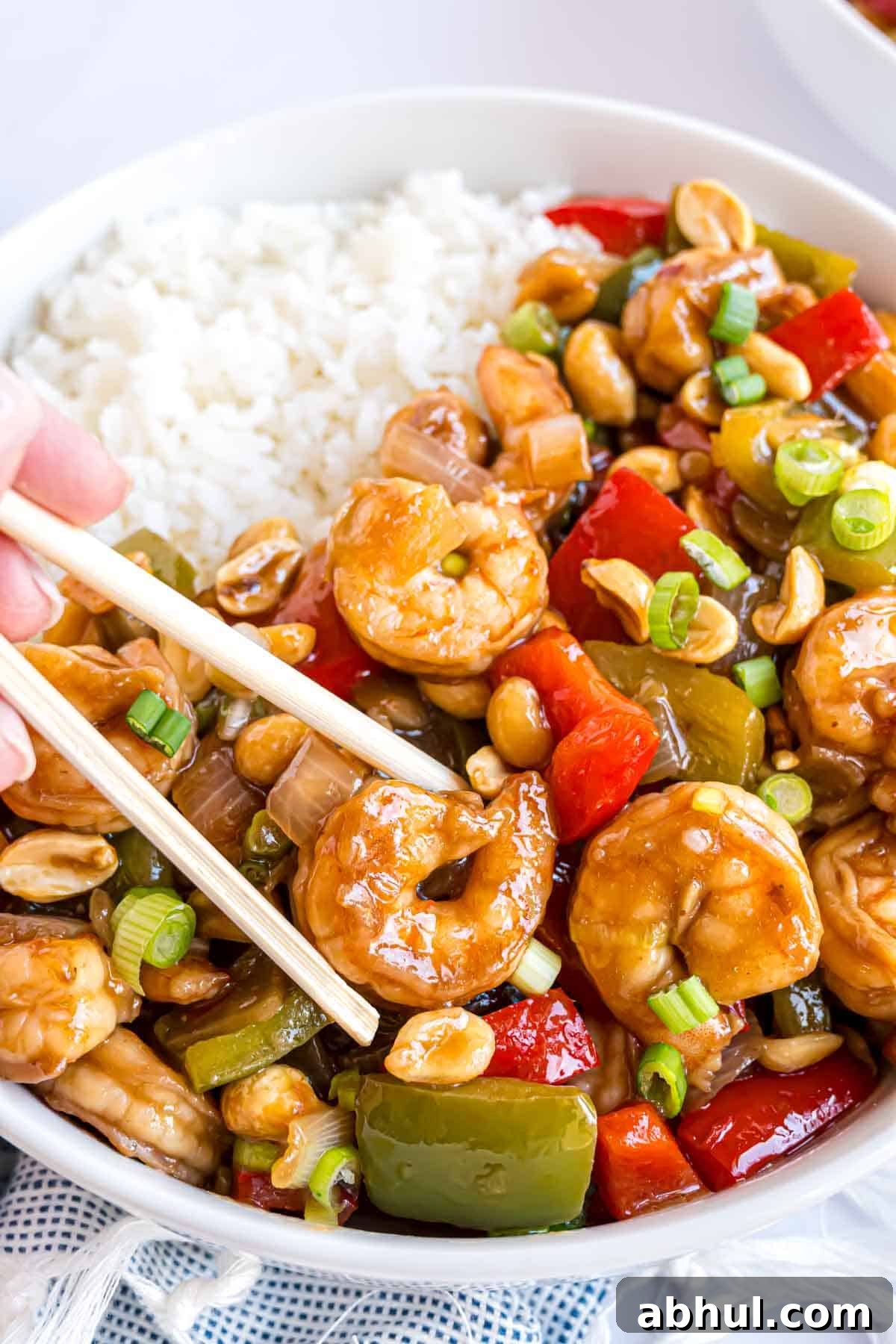
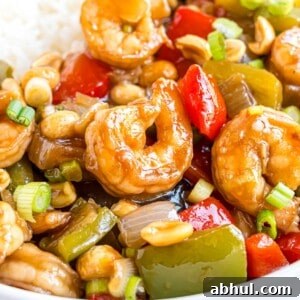
Kung Pao shrimp pairs tender shrimp with crisp stir-fried vegetables and a sweet-and-spicy sauce made from soy sauce, hoisin, rice vinegar and toasted sesame oil. Crushed red pepper flakes provide heat, which you can adjust to taste, and roasted peanuts add a satisfying crunch.
About This Kung Pao Shrimp Recipe
- Easy-to-find ingredients. This Americanized version uses common pantry items, so you can shop at most grocery stores rather than specialty markets.
- Ready in 30 minutes. Stir-fries are quick to make: protein, vegetables, and a simple sauce. This recipe is great for busy weeknights.
- Bold sweet, sour, and umami flavors. A mix of soy sauce, hoisin, rice vinegar and sesame oil creates depth, while peppers, garlic, ginger and peanuts add flavor, color and texture.
Ingredient Notes
Refer to the recipe card below for exact measurements.
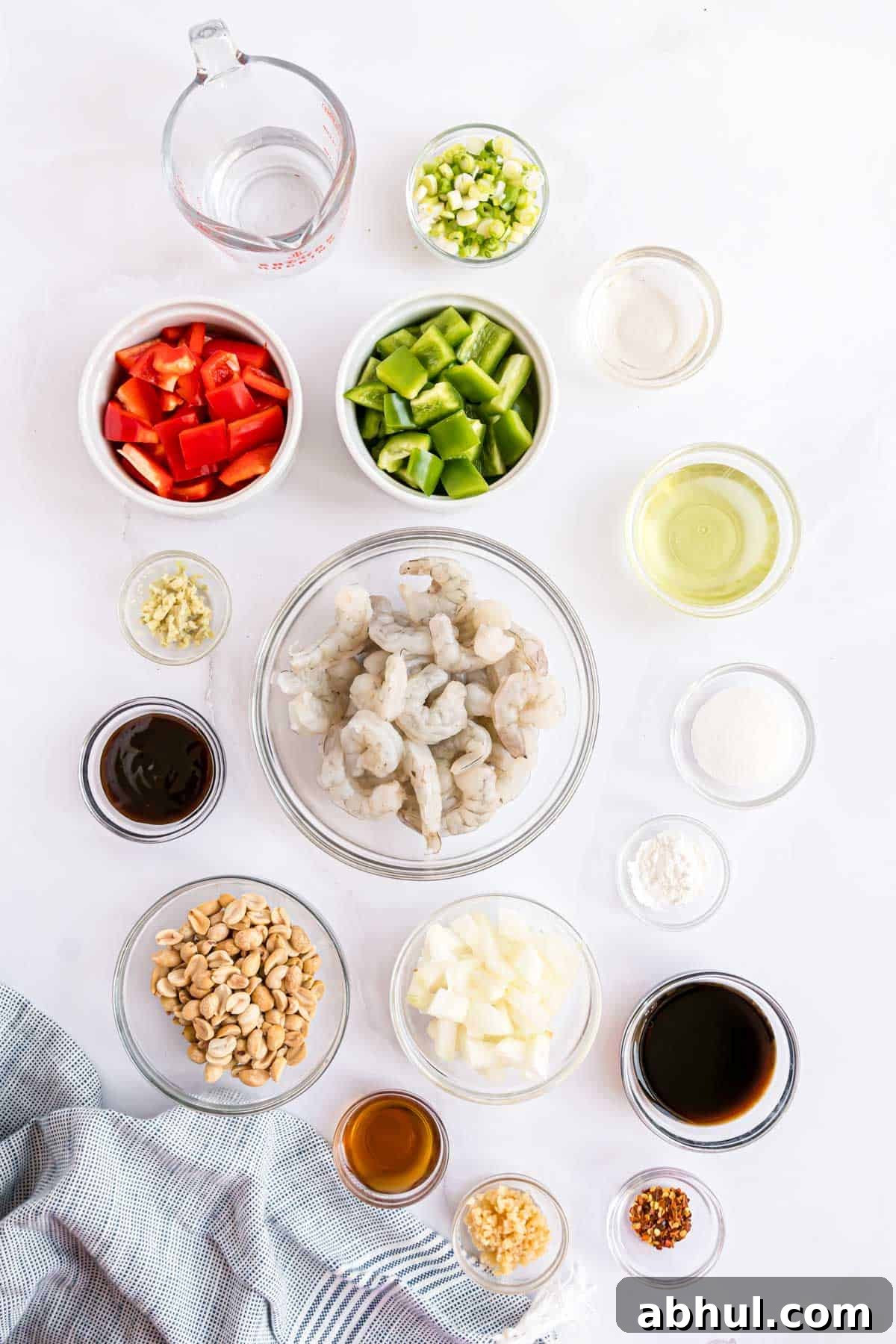
- Shrimp: Use about 1 pound of large raw shrimp (20/30 is recommended), peeled and deveined. Thaw frozen shrimp according to package instructions.
- Soy sauce: Used in both the marinade and the sauce. Shaoxing wine can substitute in the marinade if you prefer a more traditional flavor.
- Cornstarch: A small amount in the marinade keeps the shrimp tender; cornstarch also thickens the sauce to a glossy finish.
- Rice vinegar: Provides brightness; avoid seasoned rice vinegar. Chinese black vinegar or balsamic can be substituted for a different tang.
- Hoisin sauce: A sweet, savory ingredient found in the Asian aisle that helps build the sauce’s depth.
- Toasted sesame oil: Adds a distinct nutty aroma—use sparingly since it’s strong.
- Crushed red pepper flakes: Add spice; start with less and adjust to taste. Sichuan pepper or dried chilies are more authentic alternatives.
- Oil: Use a high-heat oil such as grapeseed, avocado, vegetable, or peanut oil for stir-frying.
- Aromatics and vegetables: Fresh garlic, ginger, bell peppers, onion and green onions round out the dish.
- Peanuts: Unsalted roasted peanuts or cashews provide crunch; traditional versions often toast raw peanuts in the wok.
Why Cornstarch?
Cornstarch in the marinade—called velveting—helps keep shrimp or meat moist and tender. It also thickens the sauce so it clings to the ingredients with a glossy, syrupy finish.
How To Make Kung Pao Shrimp
Cook the rice. If serving with rice, start it first. Jasmine or basmati rice work well; brown rice is a heartier choice.
Marinate the shrimp. Toss shrimp with soy sauce and a teaspoon of cornstarch in a bowl and let sit about 15 minutes.
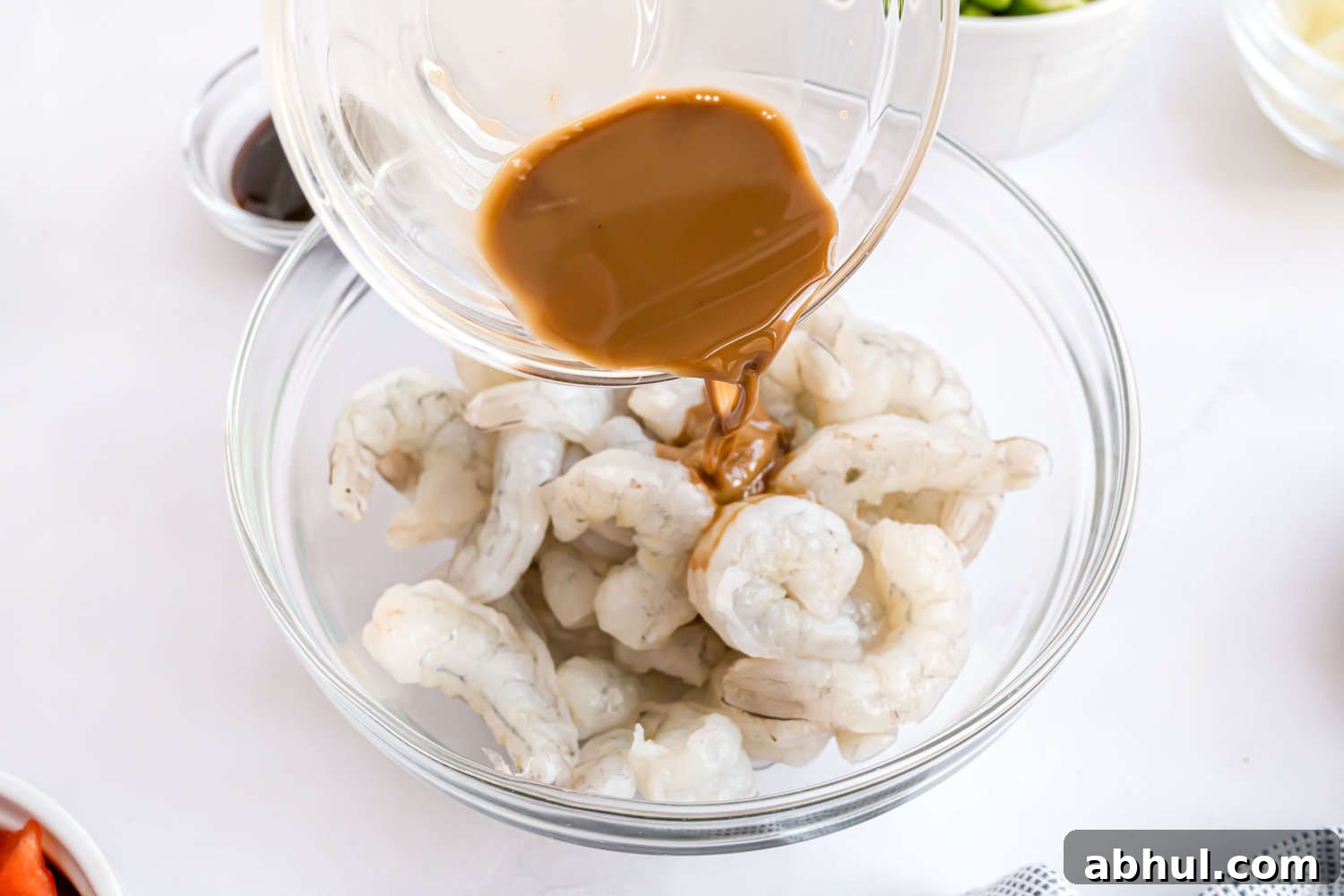
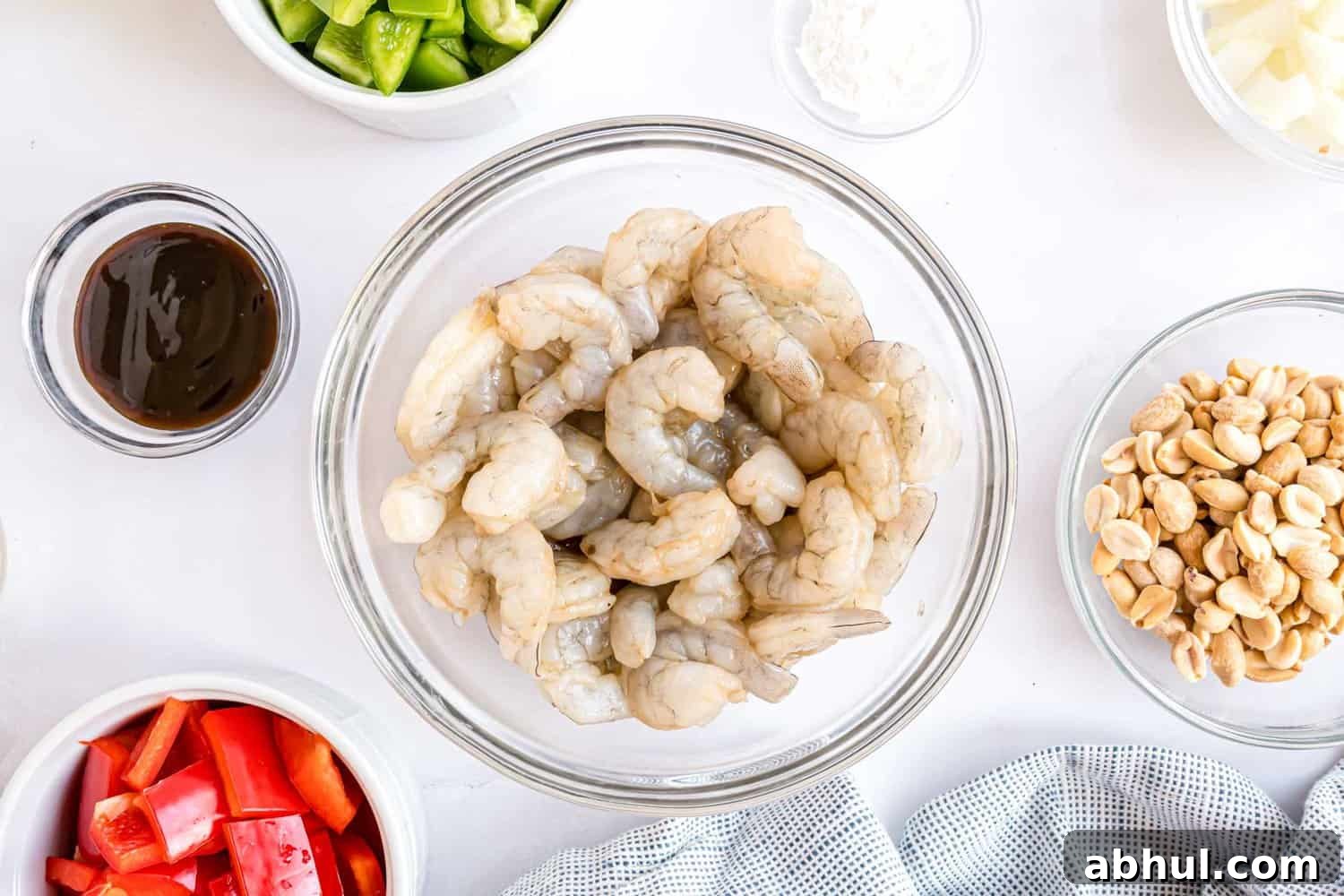
Make the sauce. Whisk together water and cornstarch, then add soy sauce, rice vinegar, hoisin, sugar, toasted sesame oil and crushed red pepper flakes. Set aside.
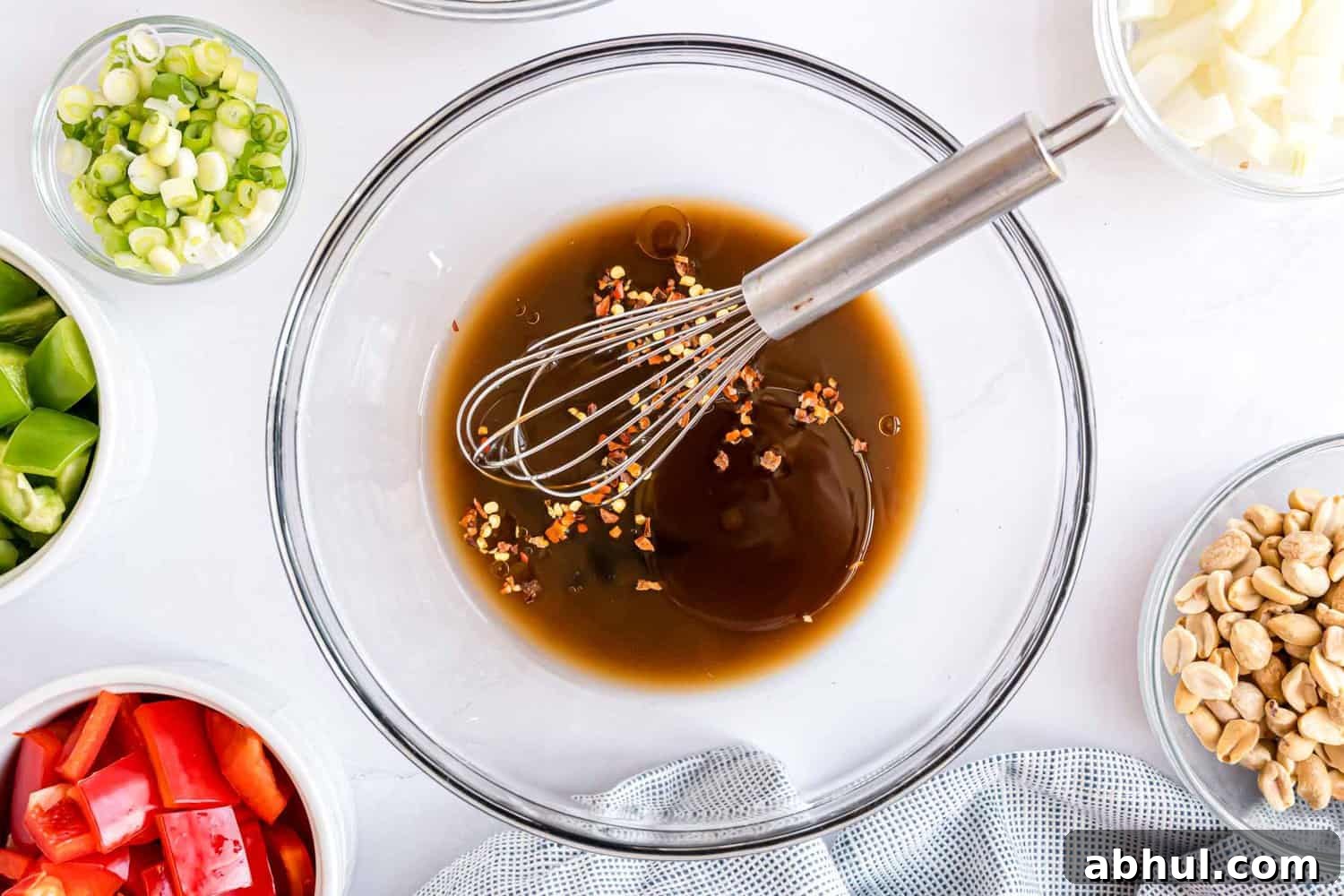
Prep the vegetables. Chop the bell peppers and onion, slice the green onions, and mince garlic and ginger while the shrimp marinates.
Cook the shrimp. Heat 1 tablespoon oil in a large skillet or wok over medium-high heat until shimmering. Add shrimp in a single layer and cook until pink, about 2 minutes per side depending on size. Transfer to a plate and wipe the pan.
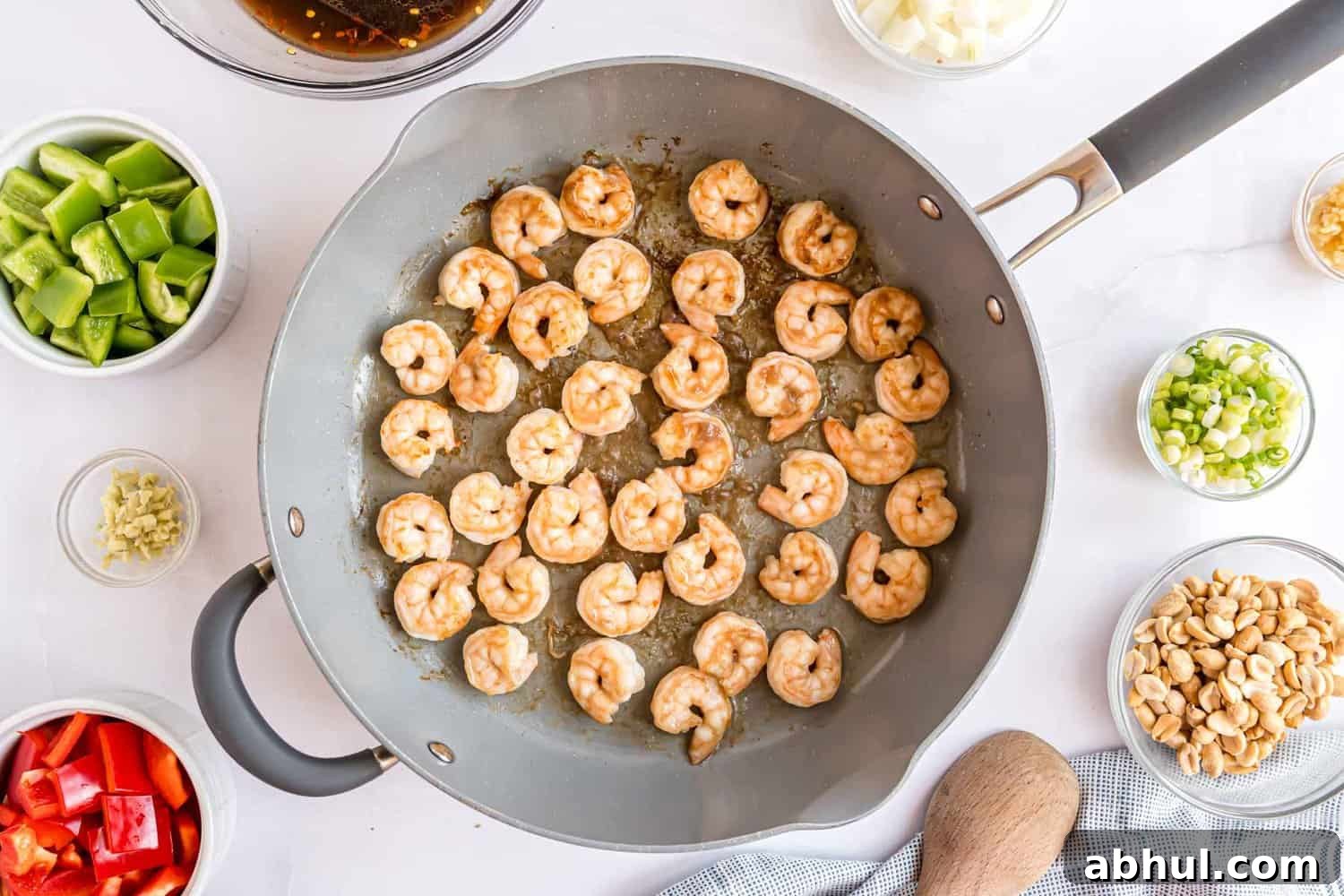
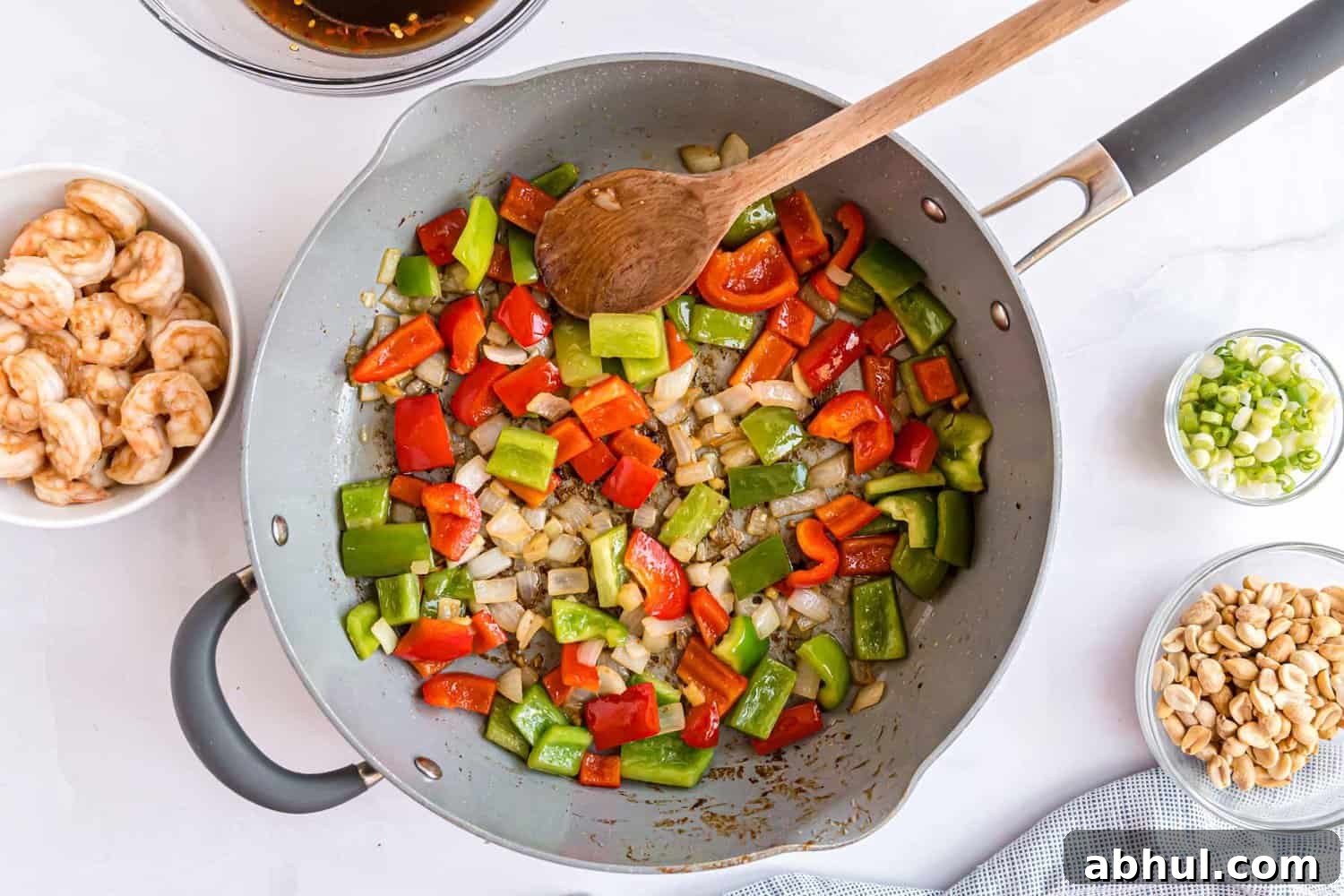
Stir-fry the vegetables. Add the remaining oil, then quickly sauté garlic and ginger until fragrant. Add onions and bell peppers and cook about 5 minutes until tender-crisp.
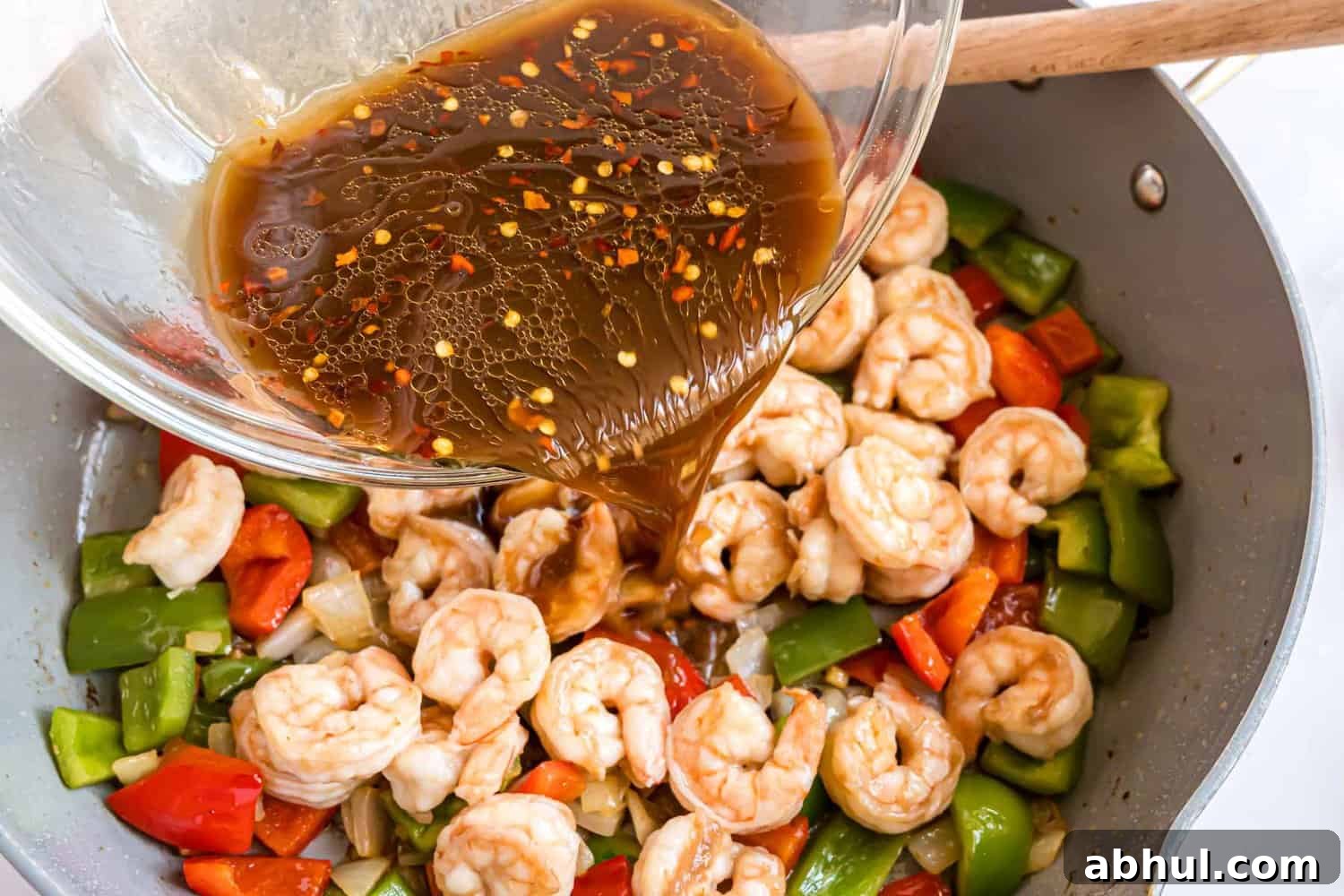
Add the sauce and combine. Return the shrimp to the pan, whisk the sauce again, and pour it in. Simmer over medium heat 1–2 minutes until the sauce thickens and coats the shrimp and vegetables.
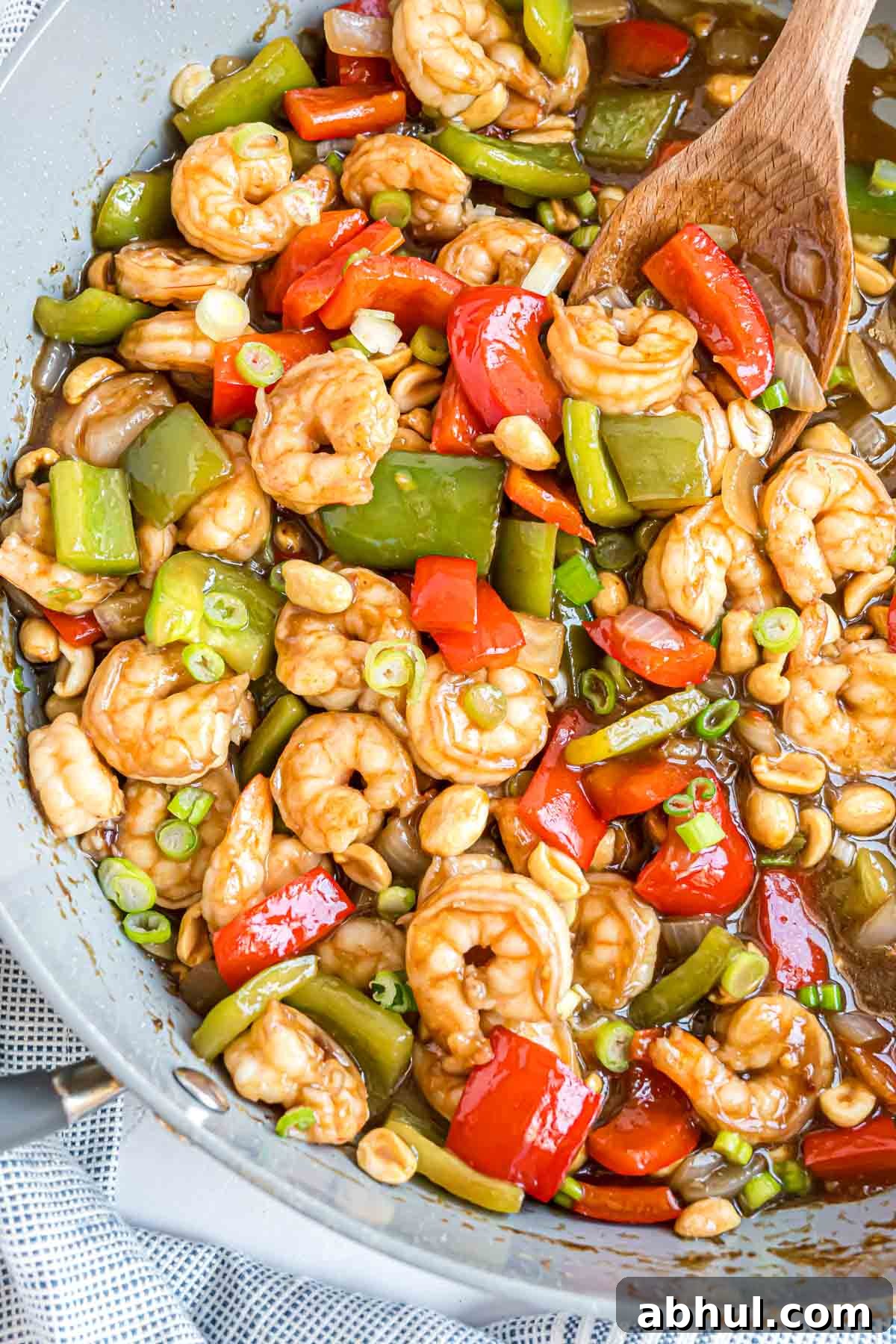
Finish with peanuts and green onions. Stir in roasted peanuts and sliced green onions, heat briefly, and avoid overcooking the shrimp. Garnish with extra green onions or a sprinkle of red pepper flakes if desired.
FAQs
Hoisin is a thick, fragrant, slightly sweet sauce made from fermented soybeans, garlic, vinegar, sugar and spices. It’s commonly used as a glaze, dip or stir-fry flavoring and is found in the Asian section of most supermarkets.
Good substitutes include tamari (gluten-free), soy sauce, oyster sauce, sweet-and-sour or teriyaki sauce, though none will taste exactly like hoisin.
Sichuan pepper is not a true pepper but a citrus-family spice that gives a numbing, tingling sensation. This recipe uses red pepper flakes for accessibility, but Sichuan pepper or dried chilies are authentic options.
Tips For Success
- Prep everything first. Stir-fries cook quickly, so have vegetables chopped and sauce mixed before you heat the pan.
- Avoid overcooking shrimp. Shrimp become tough if overcooked. Cook them briefly before combining with vegetables and sauce so they stay tender.
Recipe Variations
- Different proteins. Use bite-sized chicken for kung pao chicken, or try baked or air-fryer tofu for a vegetarian version.
- Swap vegetables. Broccoli, carrots, celery or sugar snap peas all work well in this stir-fry.
- More sauce. If you prefer a saucier dish, double the sauce ingredients.
- More authentic: Use Sichuan pepper or whole dried chilies, shaoxing wine in the marinade, and Chinese black vinegar for a closer-to-traditional flavor.
Make Ahead Ideas
Get a head start: Thaw shrimp overnight in the fridge. Mix the sauce, slice vegetables and mince aromatics ahead of time and store covered—this saves 10–15 minutes when cooking.
Storing & Reheating Leftovers
Refrigerate: Store leftovers in an airtight container for up to 2 days. Freezing is not recommended as shrimp texture will suffer.
Reheat: Reheat single portions in the microwave briefly or warm larger portions in a skillet over medium heat until just heated through. Avoid overheating the shrimp.

Free Meal Plan
If you want a weekly plan that includes this recipe, look for meal plans that pair balanced dinners with grocery lists to simplify weeknight cooking.
More Asian-Style Favorites
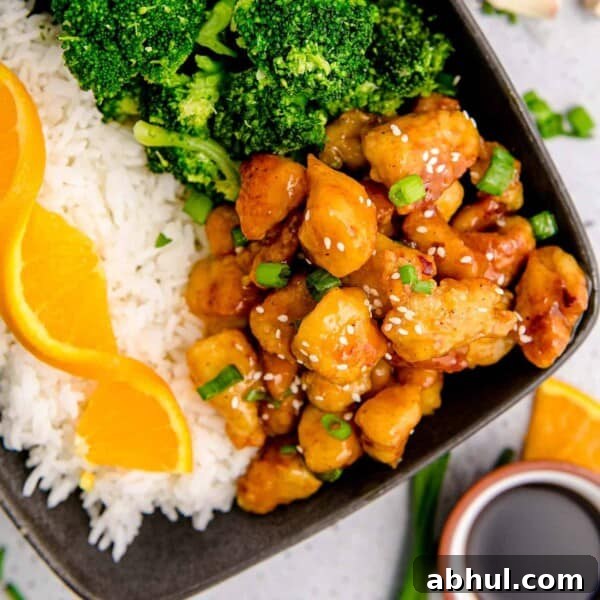
Homemade Orange Chicken Recipe
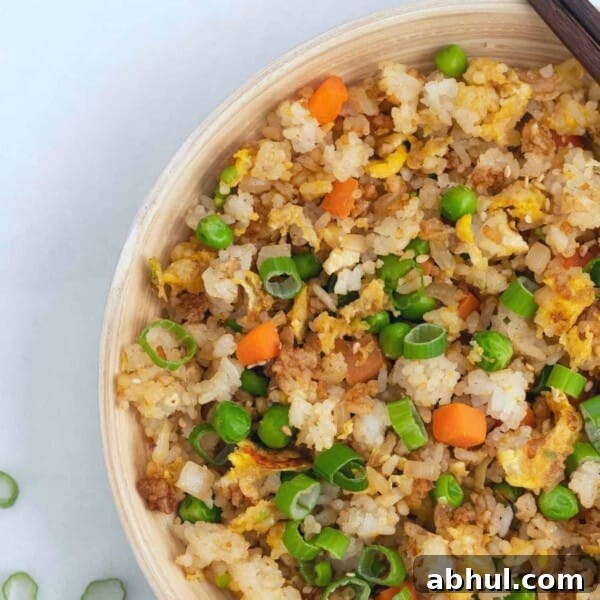
Easy Fried Rice Recipe – 30 minutes!
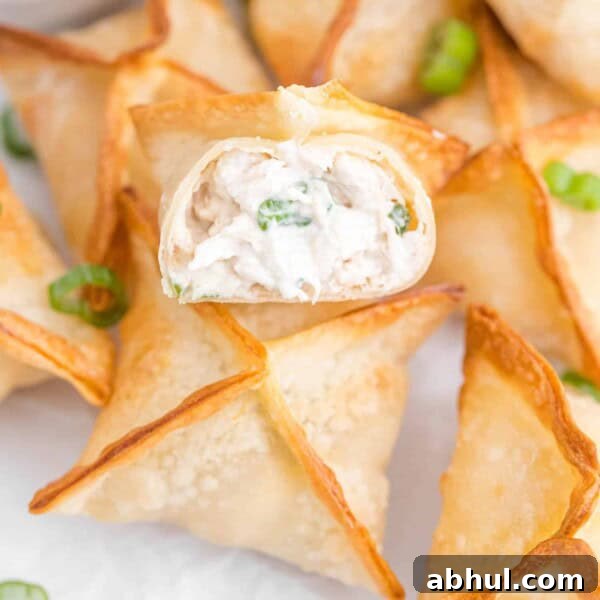
Air Fryer Crab Rangoon
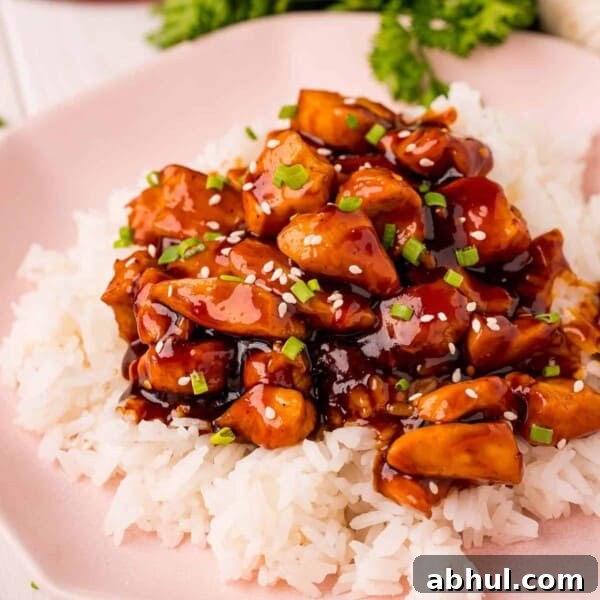
Bourbon Chicken Recipe
Kung Pao Shrimp
Ingredients
For the Marinade
- 1 pound large raw shrimp, peeled and deveined
- 1 tablespoon soy sauce
- 1 teaspoon cornstarch
For the Sauce
- ¼ cup water
- 1 teaspoon cornstarch
- 3 tablespoons soy sauce
- 2 tablespoons rice vinegar
- 2 tablespoons hoisin sauce
- 1 to 2 tablespoons granulated sugar
- 2 teaspoons toasted sesame oil
- 1 teaspoon crushed red pepper flakes
For Cooking
- 3 tablespoons oil, divided (grapeseed, avocado, vegetable or peanut)
- 1 tablespoon minced garlic (3–4 cloves)
- 1 tablespoon minced fresh ginger (about 1-inch piece)
- 1 cup chopped red bell pepper
- 1 cup chopped green bell pepper
- ¾ cup diced onion
- ½ cup roasted unsalted peanuts (or roasted cashews)
- ¼ cup sliced green onions, plus more for garnish
- salt and pepper, to taste
Instructions
- Thaw frozen shrimp under cold running water if needed.
- In a medium bowl whisk 1 tablespoon soy sauce with 1 teaspoon cornstarch. Add shrimp and toss to coat. Marinate 15 minutes.
- Make the sauce: whisk ¼ cup water with 1 teaspoon cornstarch. Add 3 tablespoons soy sauce, 2 tablespoons rice vinegar, 2 tablespoons hoisin, 1–2 tablespoons sugar, 2 teaspoons toasted sesame oil and 1 teaspoon crushed red pepper flakes. Set aside.
- Heat 1 tablespoon oil in a large skillet over medium-high heat until shimmering. Add shrimp in a single layer and cook until pink, about 2 minutes per side depending on size. Transfer shrimp to a plate and wipe the skillet.
- Add the remaining 2 tablespoons oil to the skillet. Sauté garlic and ginger until fragrant, then add peppers and onion and stir-fry until softened, about 5 minutes.
- Return shrimp to the skillet. Whisk the sauce again, pour it in, and simmer over medium heat 1–2 minutes until the sauce thickens and coats the shrimp and vegetables.
- Stir in peanuts and sliced green onions, heat briefly, then remove from heat. Serve hot over rice or noodles and garnish with additional green onions if desired.
Notes
- Use large shrimp to avoid overcooking small pieces. Tails on or off is a personal preference.
- Red pepper flakes are used here for accessibility. If you have Sichuan pepper or dried chilies, those are authentic alternatives. If sensitive to heat, start with ½ teaspoon red pepper flakes and adjust to taste.
- Storage: Refrigerate leftovers in an airtight container for up to 2 days. Freezing is not recommended as texture will change.
Nutrition
Nutrition information is an approximation.