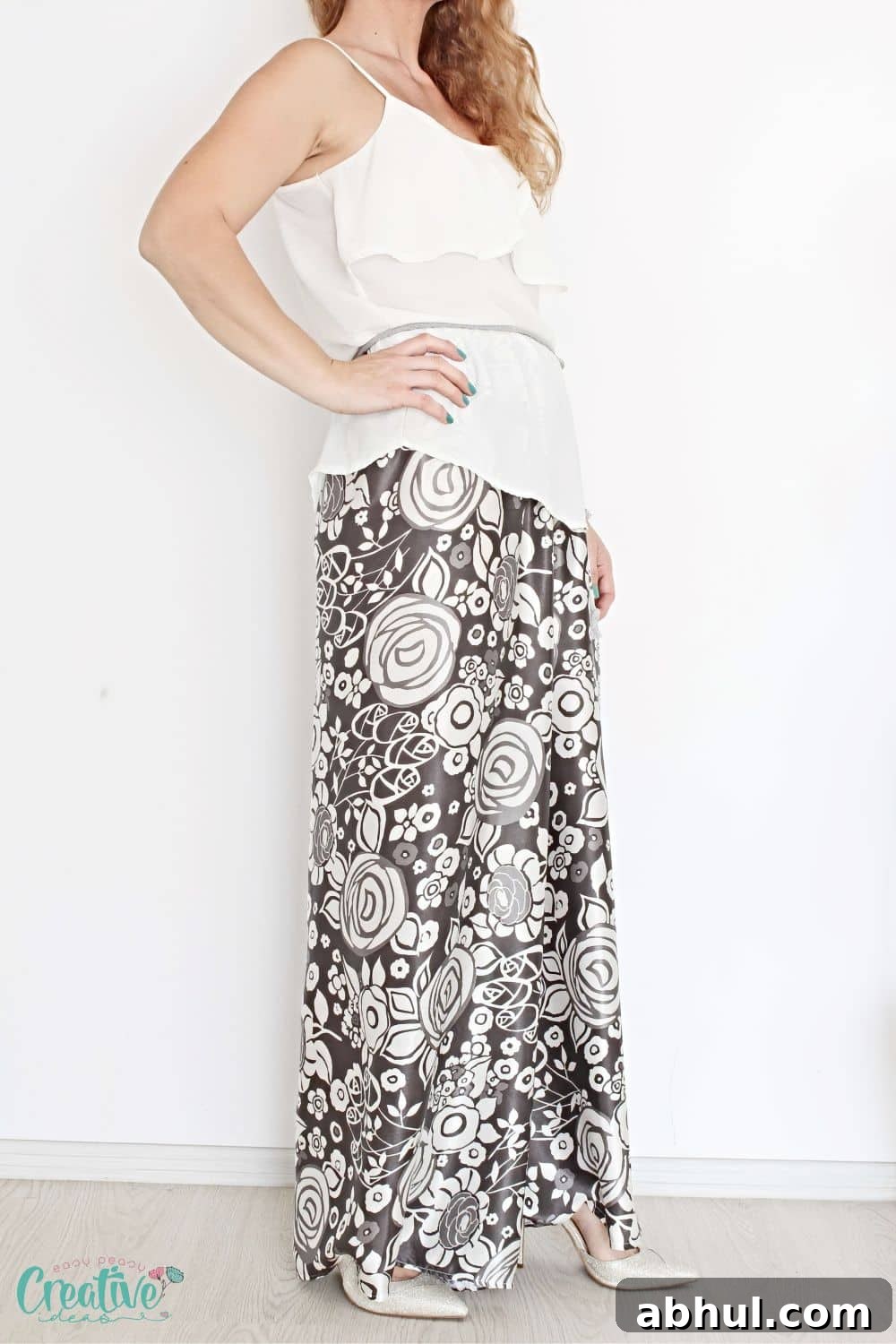
Don’t have the sewing skills to make your own pants? No worries! This wide leg pants pattern is beginner-friendly and requires minimal experience. With straightforward drafting, cutting, and sewing steps, these DIY wide leg pants are ideal for newcomers to sewing.
Wide leg pants pattern
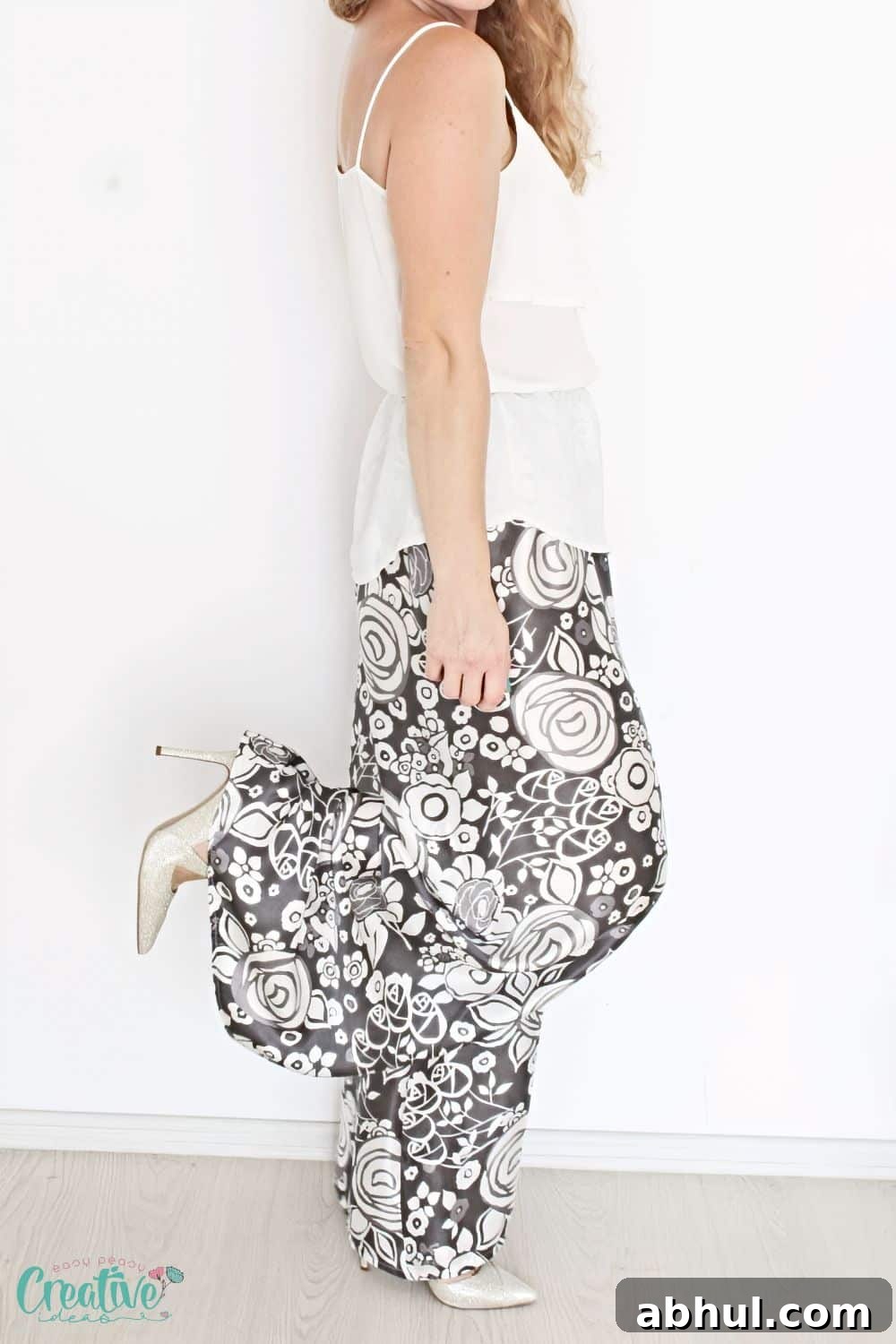
Looking for a fresh addition to your wardrobe? This wide leg pants pattern works well for beginners and more experienced sewists. The relaxed fit and gentle flare make these pants versatile—perfect for casual days, holidays, or dressier events depending on your fabric choice.
Wide leg pants add style and comfort, and this tutorial breaks the process into easy, practical steps. You’ll learn how to create a custom pattern, cut the fabric, and sew the pieces together so you can make a flattering pair that fits you perfectly.
These pants are highly versatile: wear them with heels or flats, dress them up or down, and customize length and waist style to suit your taste. Making your own pair saves money and gives you a garment tailored to your measurements.
Need more sewing ideas for women?
- DIY bubble skirt tutorial
- Gathered waist dress pattern
- 30 minutes skirt
- Half circle skirt with lining and zipper
- V neck dress pattern
- DIY tulle skirt
I began this project without a dedicated pattern and discovered that wide leg pants are surprisingly simple to make. The approach in this tutorial shows how to draft a pattern that you can adapt to your measurements, making the process less intimidating for beginners.
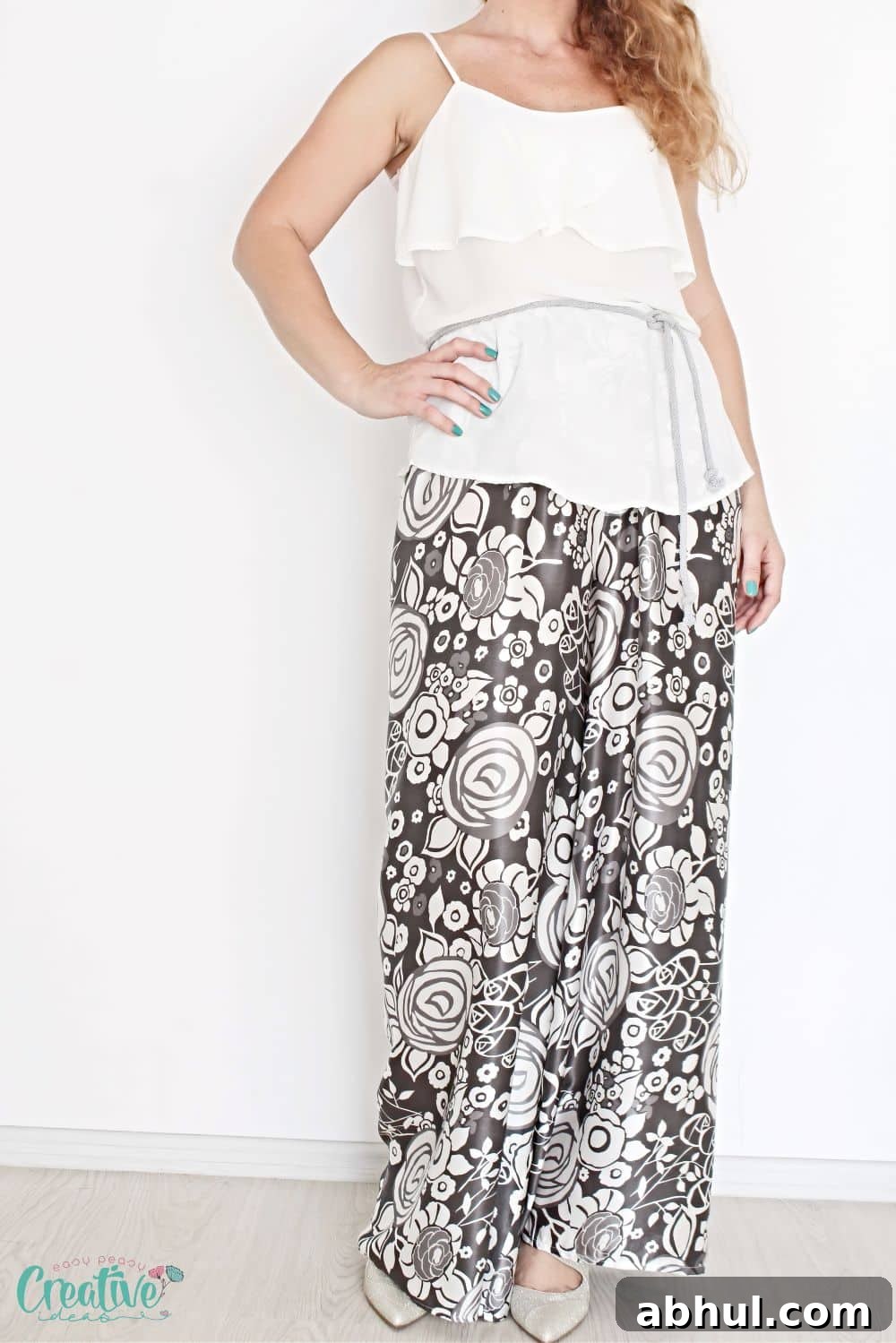
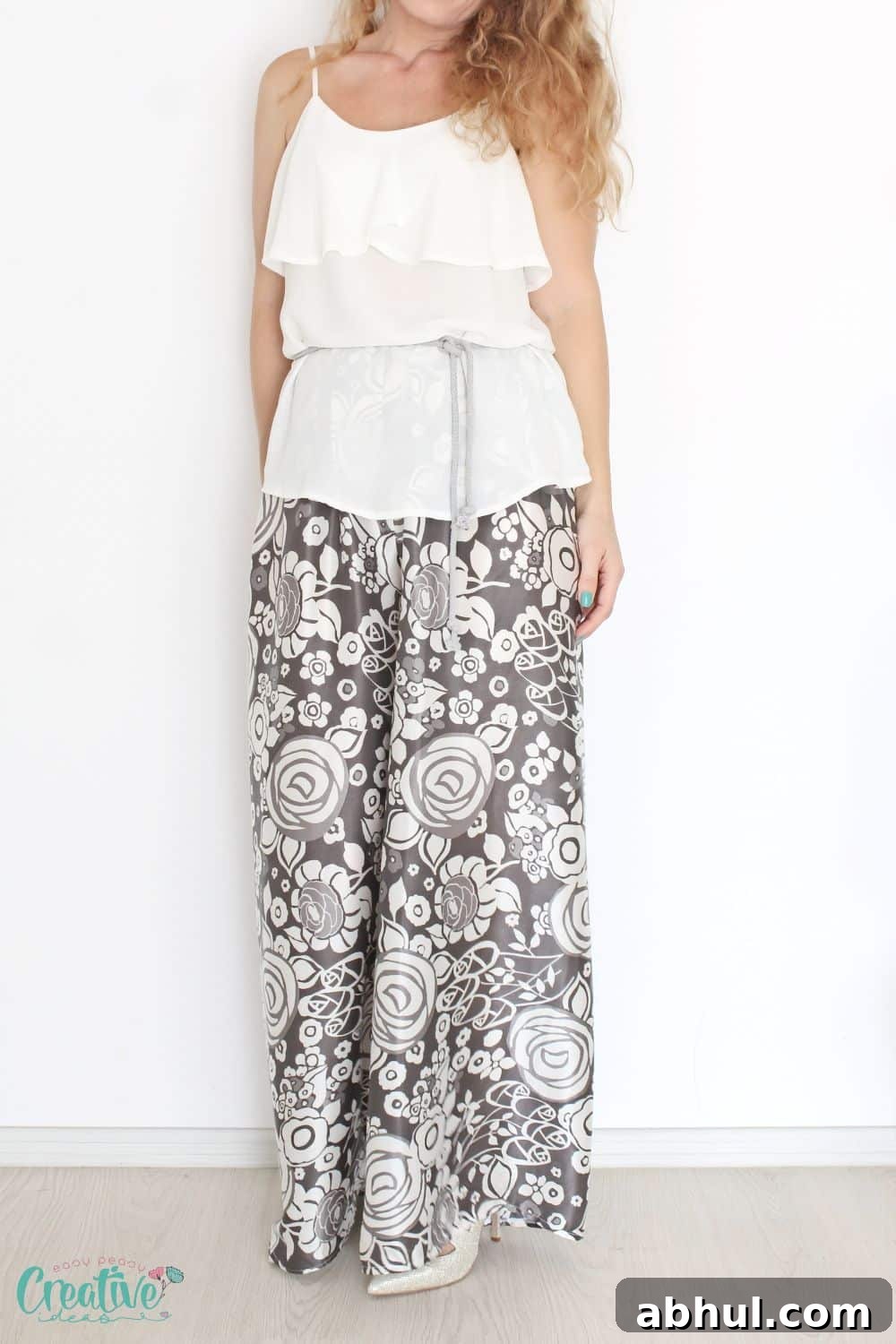
I chose a lightweight, flowy gray fabric with a subtle floral print for this pair. A soft drape works beautifully for wide leg trousers, giving them fluid movement and an elegant silhouette.
Fabric requirements for palazzo wide leg pants
Select a lightweight, draping fabric such as rayon, cotton lawn, linen, silk, rayon crepe, or similar. For cooler weather you can use medium-weight fabrics or add a lining. Avoid stiff fabrics like denim or corduroy if you want the relaxed look of wide legs.
If you want a fitted waist area, add darts or pleats and include a zipper in a side seam or the back. That adds shaping but also complexity—this guide keeps things simple by showing an elastic or simple waistband option.
How to sew wide leg trousers
If you don’t have a ready pattern, use an existing pair of wide leg pants as a template. To make them wider or longer, trace them with extra allowance. If you don’t own wide leg pants, use a straight-leg pair and add width when tracing. Leaving extra seam allowance gives room to adjust the fit later.
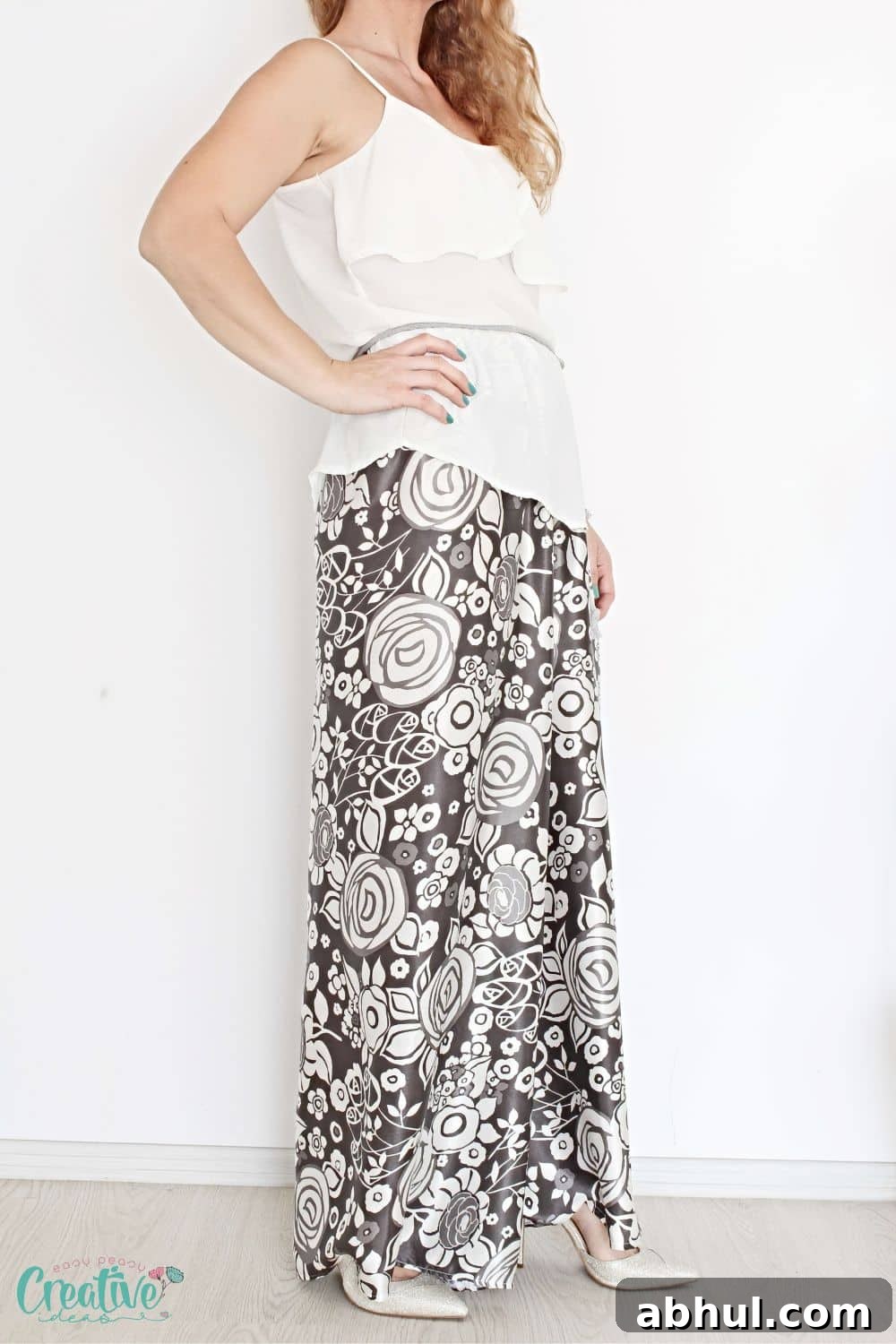
Reasons to make your own wide leg pants
- Choose the fabric to suit the occasion: formal suiting for work or lightweight flowy fabric for casual and beach looks.
- Wide legs visually elongate the legs, flattering many body shapes.
- Leaving part of the side seam open creates a sultry split for dance or evening wear.
- The construction is forgiving—large drape hides small inaccuracies, so beginners can achieve great results without perfect precision.
- Wide leg pants are comfortable, lightweight, and work well across body types, concealing midsection areas while creating a long leg line.
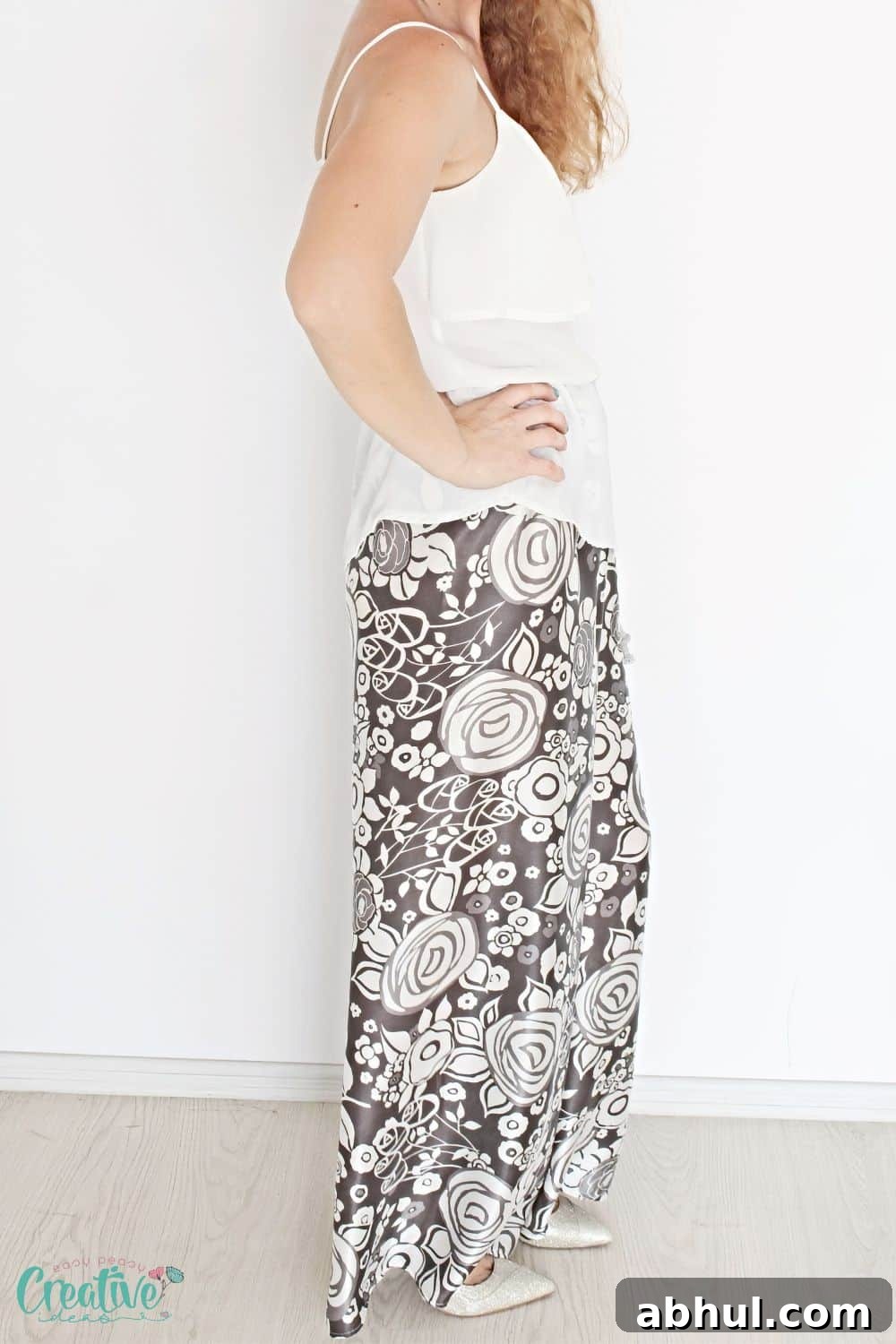
You can make these high-waist like mine or lower on the hips—choose what feels best. For a dramatic look, wear them with high heels and a fitted top. For everyday wear, a mid-rise or elastic waist keeps them casual and comfortable.
Ways to vary the style
- Add gussets or extra flare to create a skirt-like drape—this requires more advanced skills.
- Gather the leg hems with elastic or a drawcord for a salwar-inspired look; a removable cord gives two styles in one garment.
- Shorten the pattern for culottes or mid-calf lengths to save fabric and create a different silhouette.
- Try a retro flared shape for a 70s-inspired style by flaring the leg pattern pieces.
- Fasten the waist with elastic, a drawcord, a zipper and button, a belted waistband, or a decorative sash. Add a wider waistband for extra support if needed.
Ready to make your own wide leg trousers? If you enjoy palazzo-style pants, this simple project is a great place to start.
Wide leg pants sewing pattern
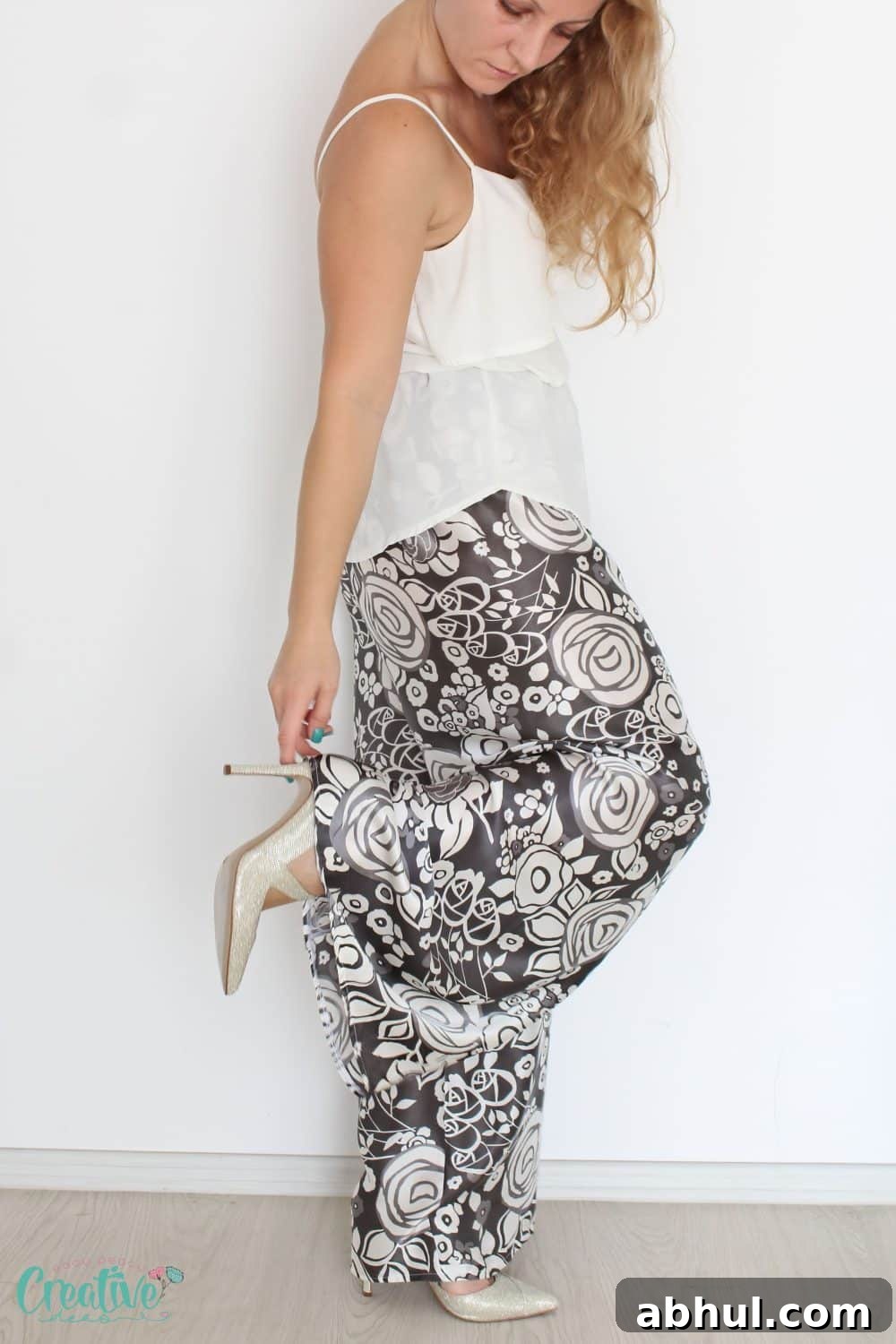
Materials
- About 2 yards (or enough for your size) of flowy fabric with good drape (silk-like, rayon, georgette, etc.)
- A pair of old wide leg pants (or straight pants to use as a template)
- Scissors
- Fabric marker or chalk
- Pins
- Elastic to fit your waist (if using elastic waistband)
- Matching thread
- Sewing machine
- Serger (optional)
- Iron and pressing surface
How to make wide leg pants
Waistband note: If the constructed waistband looks bulky, use a wide elastic directly. Measure your waist and cut elastic slightly shorter than your measurement so it sits snugly. Join elastic ends with a zigzag stitch and thread it through a casing at the top of the pants. Alternatively, add darts or pockets if desired.
Drafting your pattern directly onto fabric
- You may trace on paper first for safety. If confident, you can draft directly on fabric.
- Cut fabric into two lengthwise pieces and place right sides together; pin if slippery.
- Fold both layers in half so you can trace a leg in a doubled layout.
- Place the reference pants on the folded fabric, aligning the long side with the fold. Position slightly away from the fold if you want extra fullness.
- Trace around the bottom and sides with a fabric marker, then cut out the pieces.
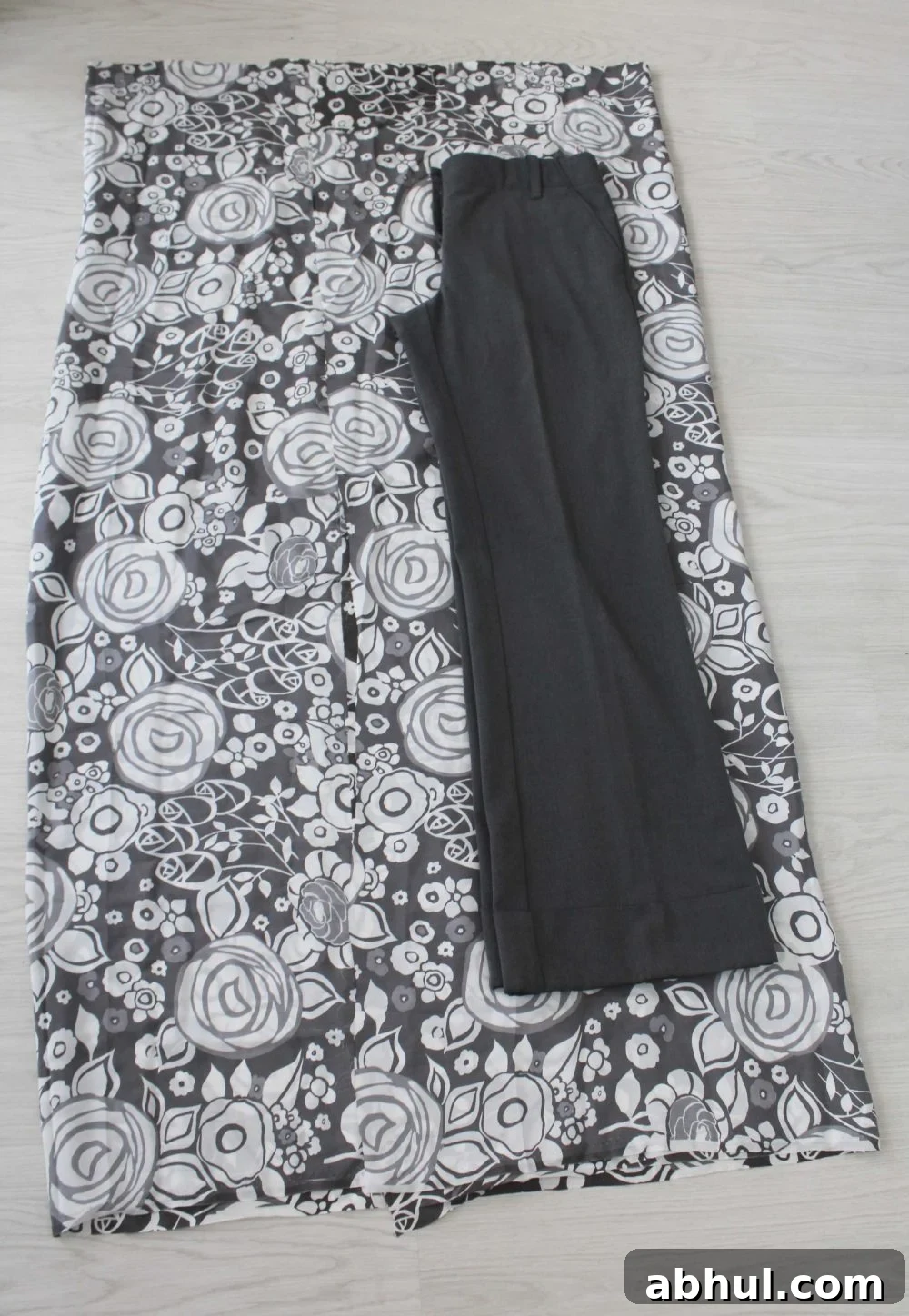
Sewing the leg pieces together
- Open the fabric at the fold so the crotch curves are visible on opposite sides.
- Match the crotch points from front to back, pin, and sew. Finish seams with a serger or zigzag if you don’t have one.
- Pin the legs together at the inner seams and sew from crotch down each leg.
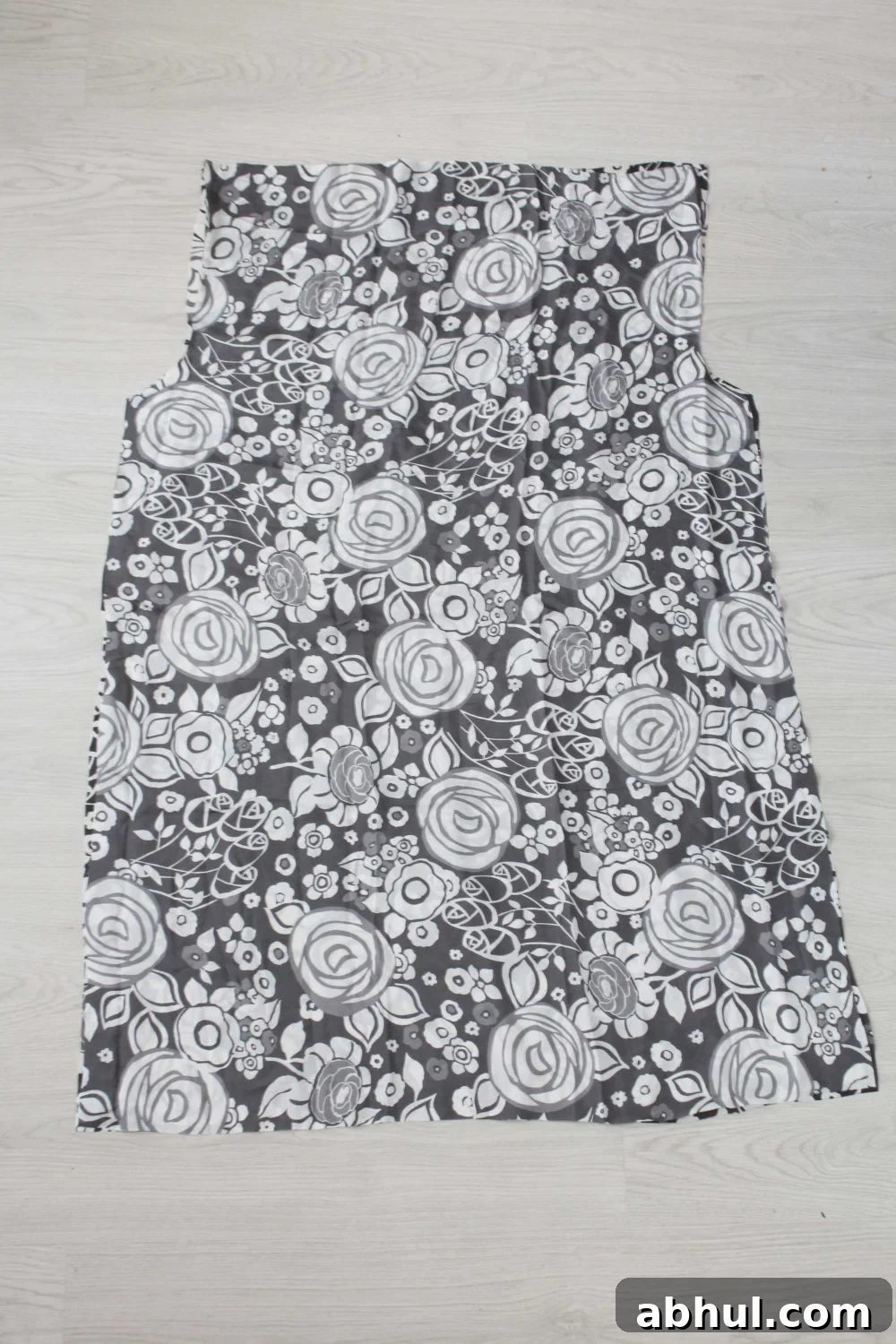
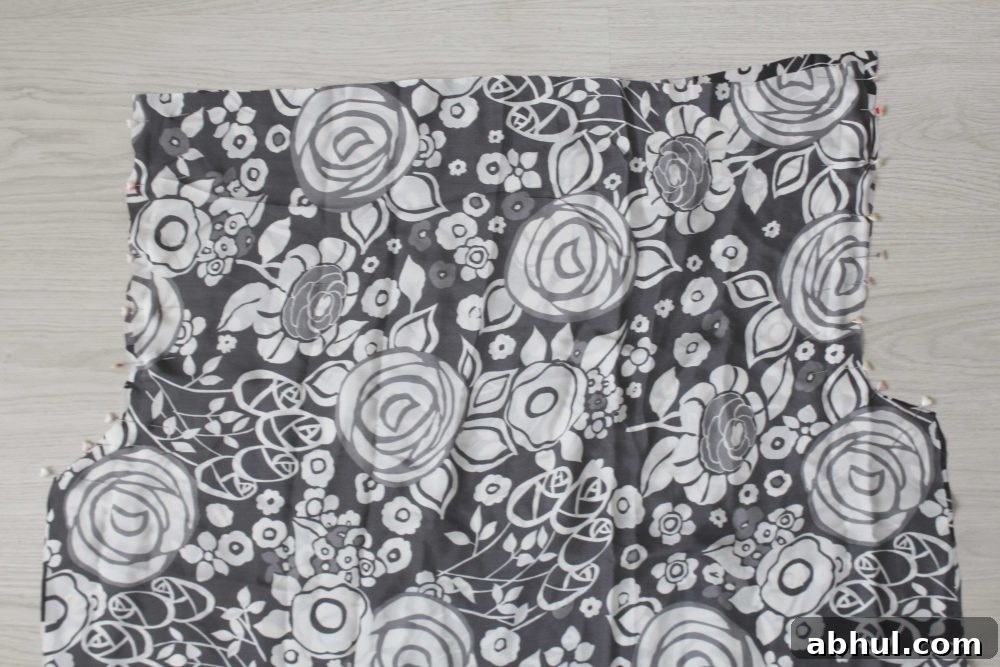
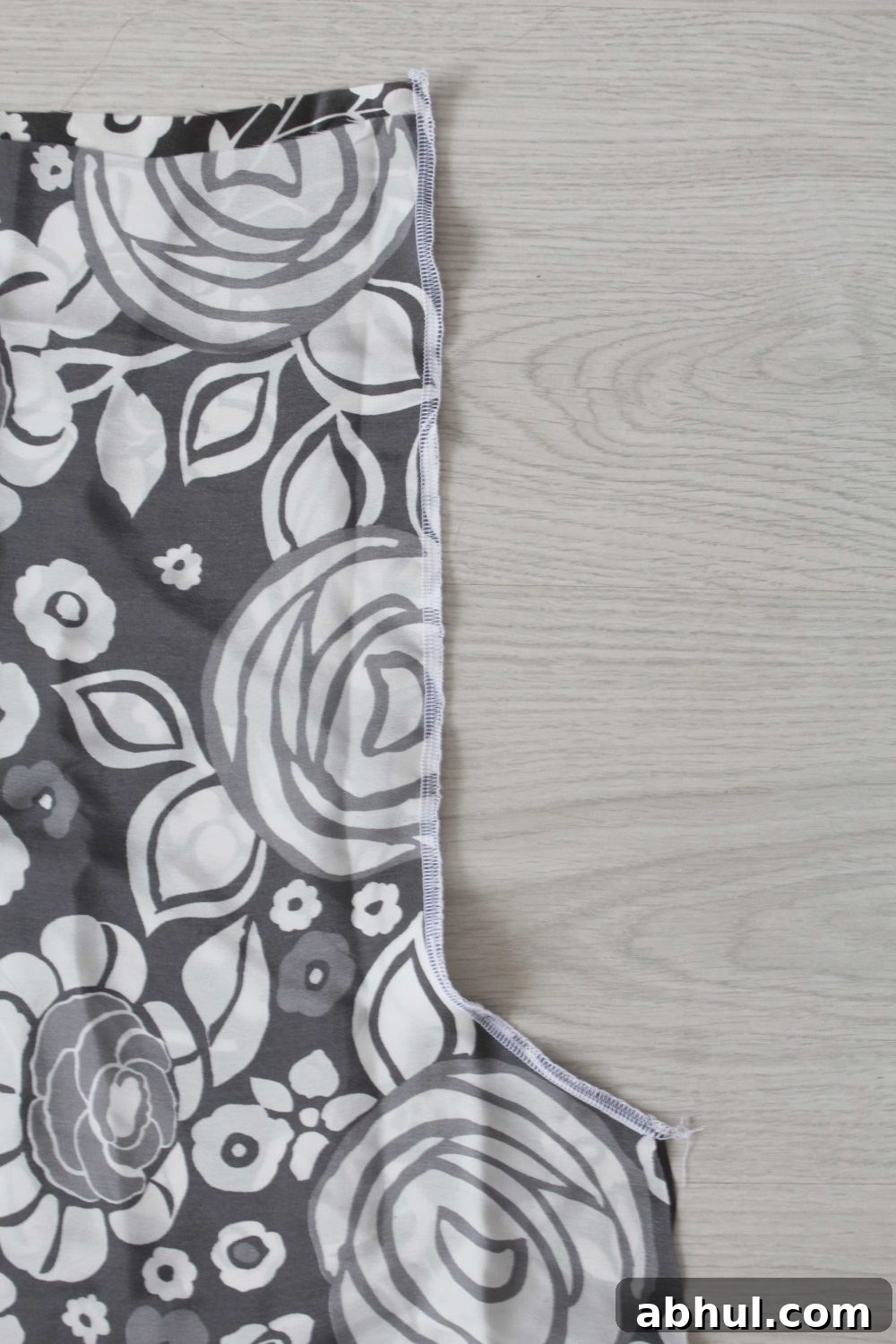
- Bring the crotch seams together and pin as needed so the pants take their natural shape, matching front and back.
- Sew the inner leg seams and press the seams flat.
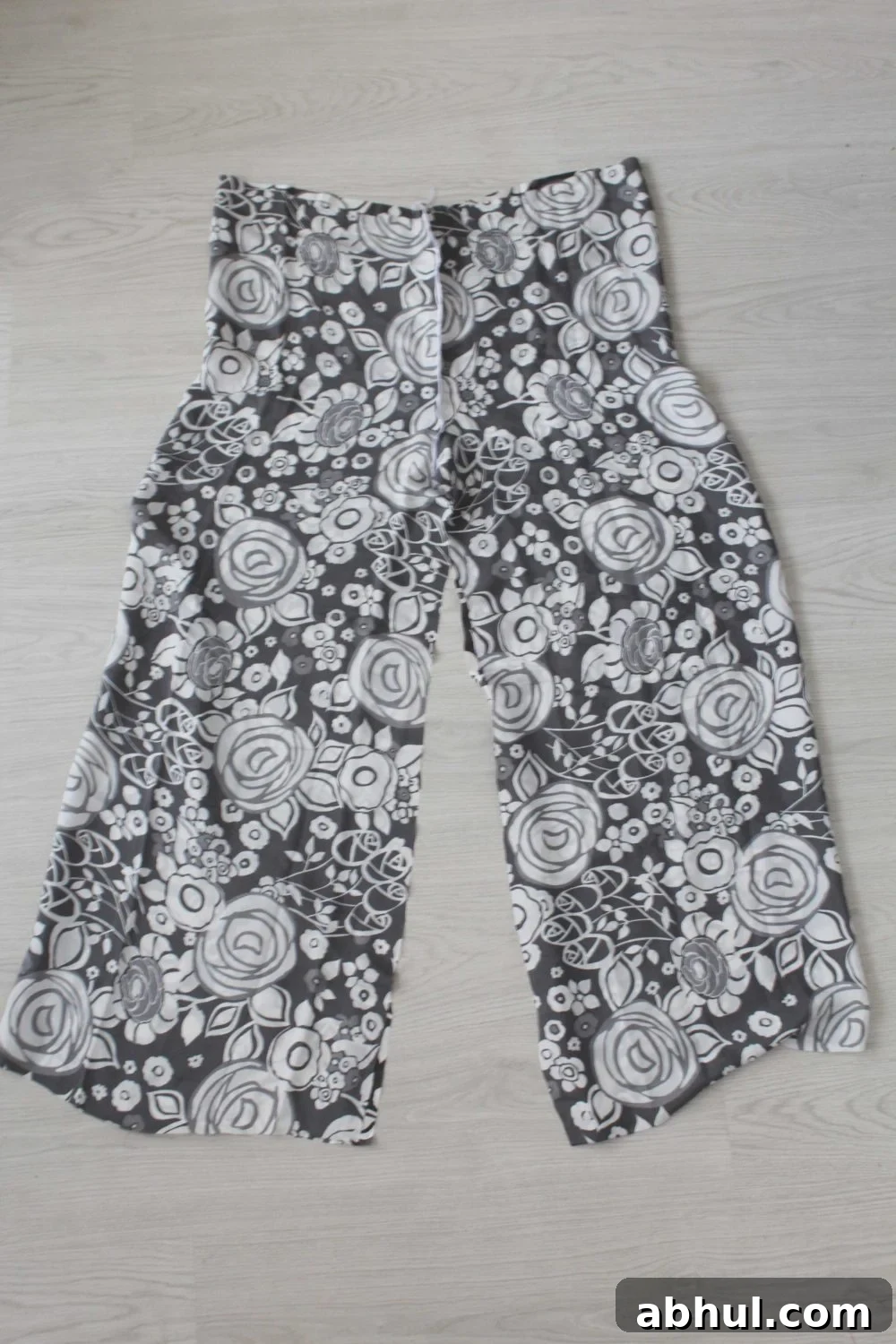
Finishing the pants
- Finish the top edge and hems: serge if available, or fold the raw edges and stitch twice for a clean finish.
- Make a casing for elastic by folding the top edge inward and stitching, leaving an opening to thread the elastic through.
- Insert the elastic, secure its ends, and close the casing. Alternatively, attach a waistband or closure of your choice.
- Turn up the hems, stitch in place, press well, and your pants are ready to wear.
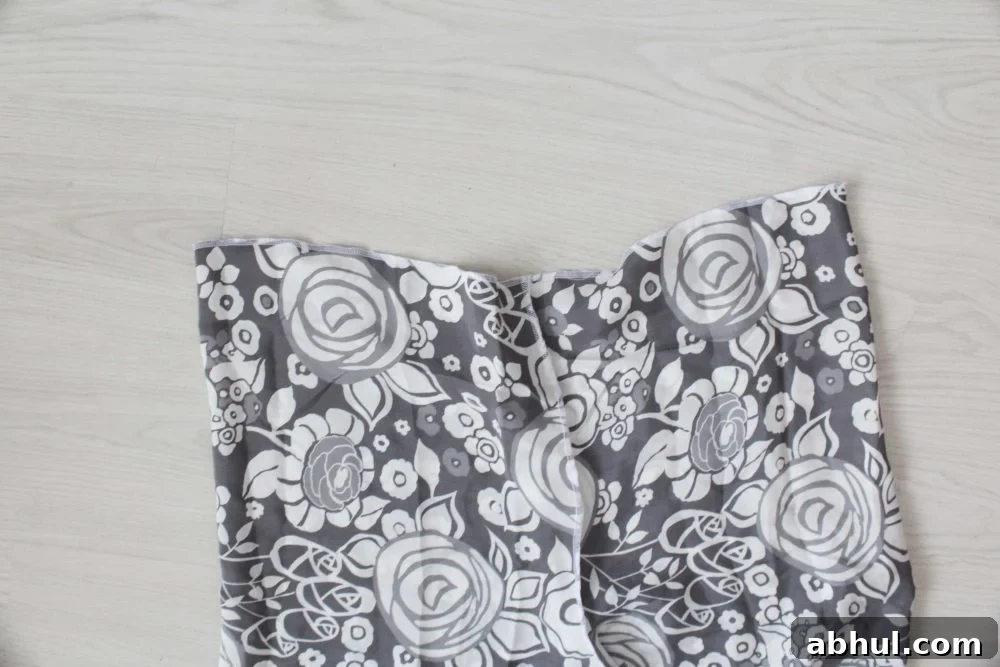
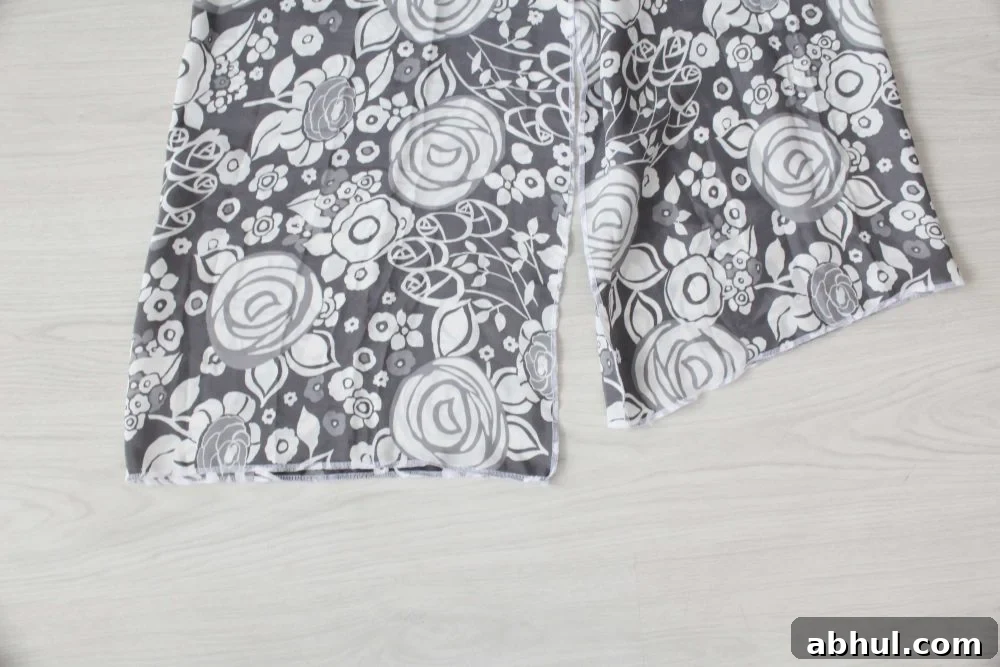
Using an existing garment to draft a pattern ensures a better fit—this method is especially useful if you want the pants to match your proportions. Once finished, press the trousers and enjoy wearing a pair you made yourself.
If you tried this tutorial, share your results and feedback in the comments below.
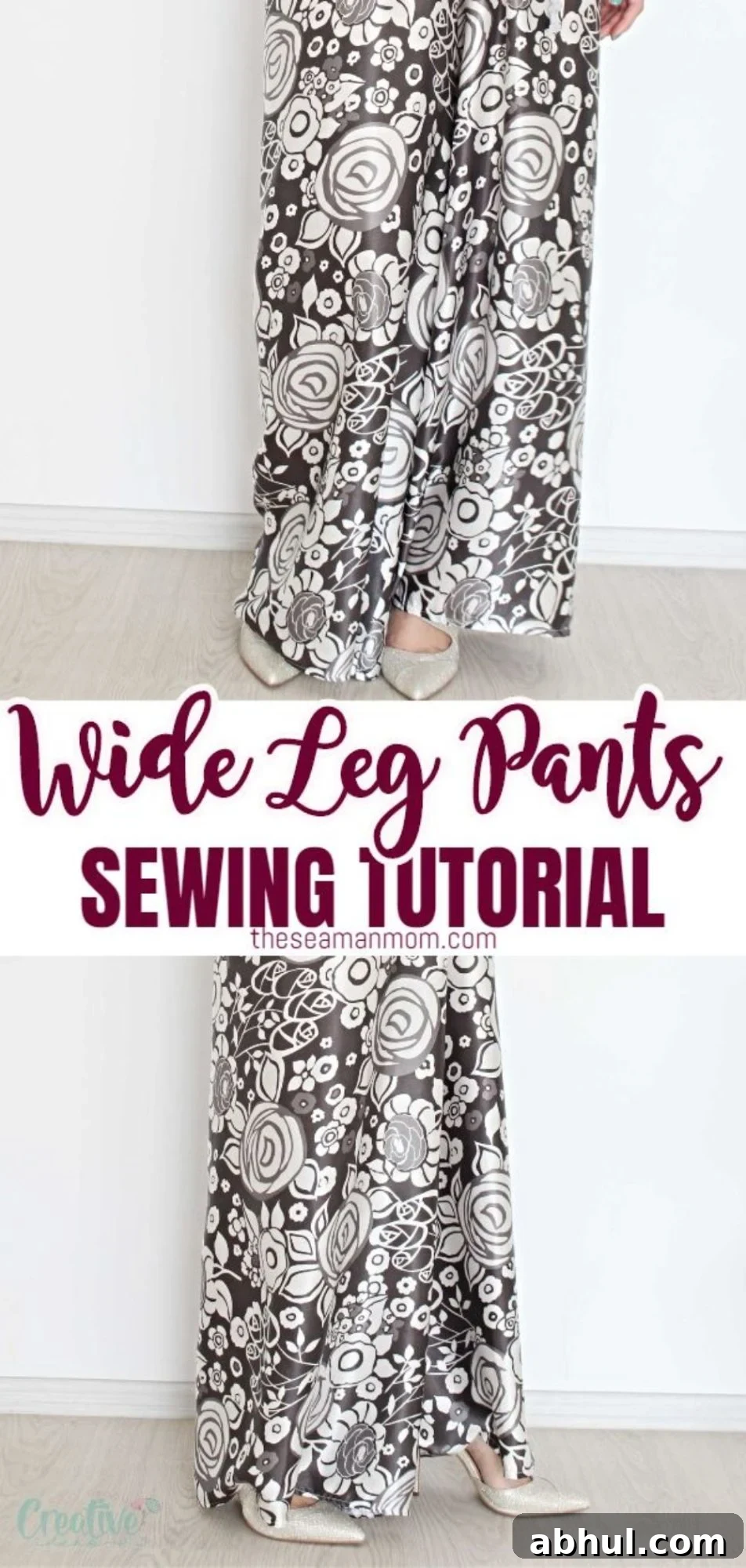
Pin to save for later
Most popular sewing projects:
- Tips for sewing a round hem
- Corded bag handles
- Flutter sleeve dress pattern
- How to laminate cotton fabric