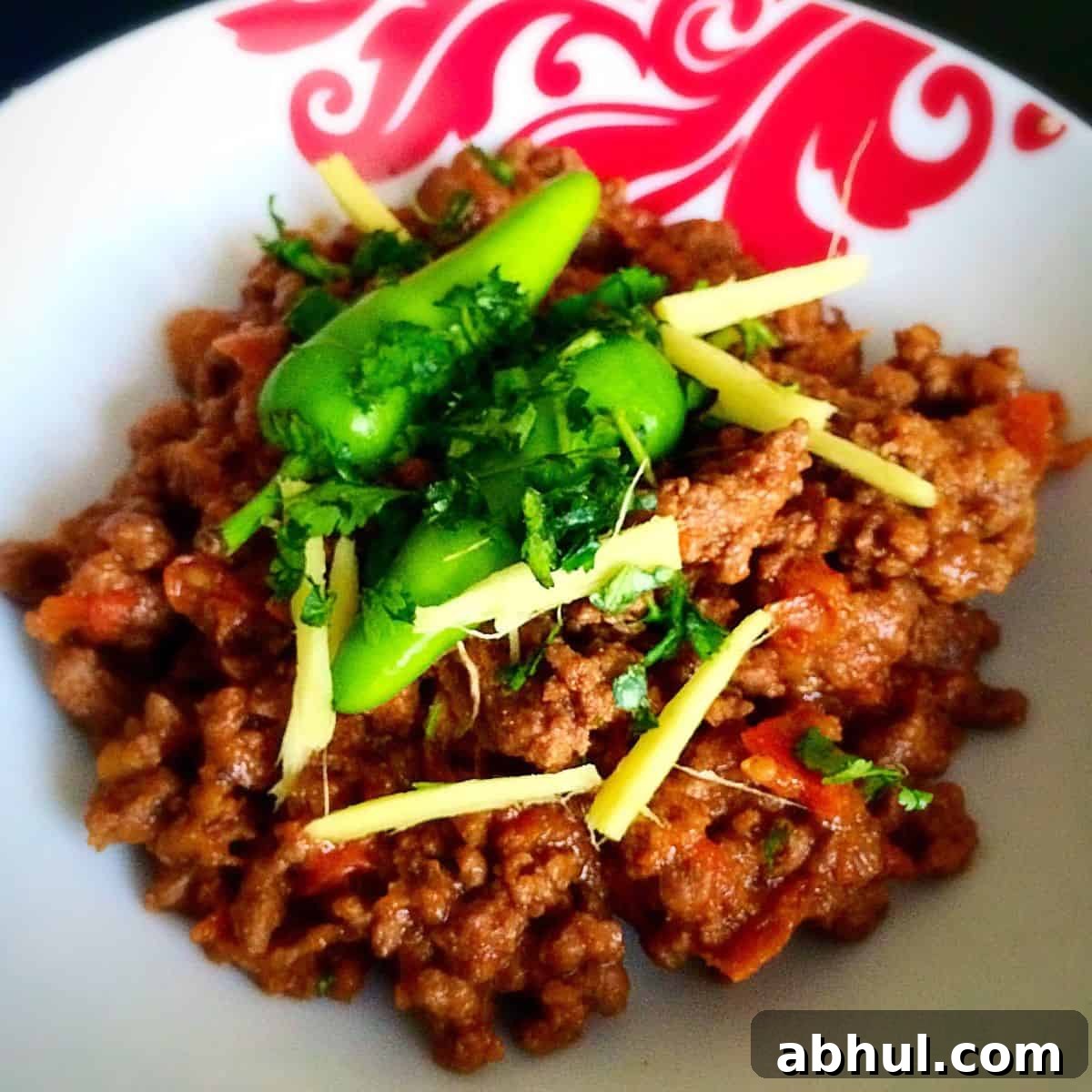
This is one of my husband’s favourite dishes. More precisely, it is his favourite Pakistani recipe of mine, and I can understand why. Karahi Keema made with mutton or lamb would easily be in my top five Pakistani dishes.
A karahi is a shallow, circular pan—similar to a wok—commonly used across South and South-East Asia. The name also refers to the style of curry cooked in that pan. Karahi curries are typically tomato-forward, with a strong presence of ginger, garlic and green chilli. The combination of tomato and ginger is a defining feature: without generous tomato and ginger flavours, the dish simply won’t have the characteristic karahi taste.

Traditional karahi often forgoes onions, a point my father always emphasised. When I first developed this recipe in 2015 I didn’t fully appreciate that choice; over the years my approach has evolved. I kept the original version of this popular recipe as published on the blog, which includes onion. If you prefer a more traditional onion-free version, you can omit the onions and rely on tomatoes, ginger and garlic to carry the base.

This recipe has been tested and adjusted over several months and it’s reliably well received. I often make it for dawat (gatherings) and dinner parties because it comes together beautifully and the final dish tastes richly satisfying.
One important detail that changes the texture and overall experience: the cut of minced meat. I recommend chunky, hand-cut mince—known as hath ka keema—rather than finely processed machine mince. Hand-cut mince has better texture and holds up well in this curry, giving you pleasing bite and mouthfeel. If hand-cut mince isn’t available, machine mince still works, but the texture will be different.

Karahi dishes often use a generous amount of oil; this helps bypass excess moisture from tomatoes and encourages browning. For everyday meals I use a bit less oil to keep the dish lighter. If you are entertaining or want a more indulgent, traditional finish, feel free to increase the oil. More oil helps the meat brown evenly and creates the glossy, desi look many people love.
A final note about ginger: in this recipe ginger is used primarily as a garnish—thin julienned strips served on top. Some cooks prefer to keep ginger raw and visible so it provides a sharp, fresh contrast. If you prefer a more integrated ginger flavour, you can add grated or minced ginger during the early cooking stages; either approach works depending on the balance you want.
Enjoy this Karahi Keema with love.
📋 Recipe
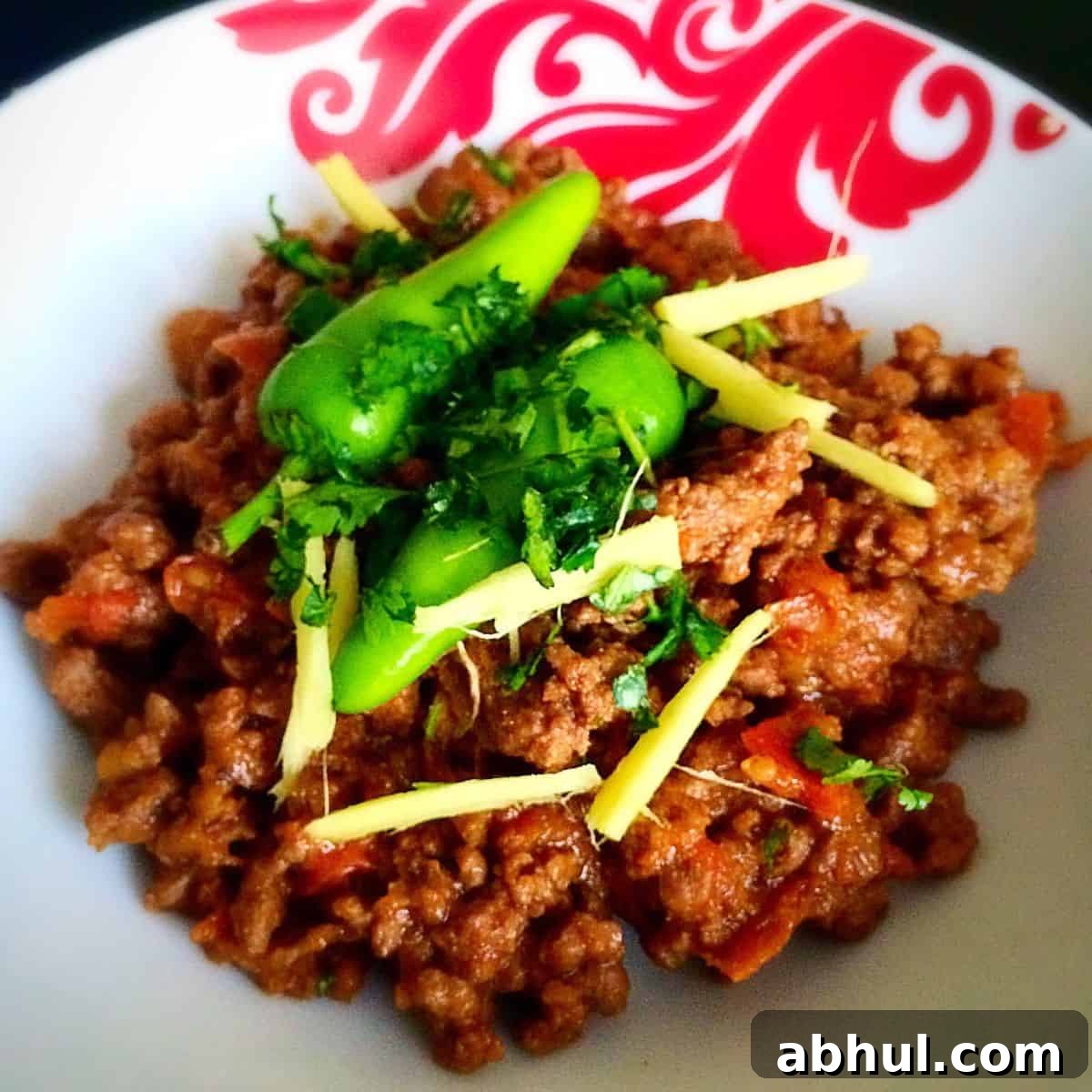
Pakistani Karahi Keema
A rich, tomato-forward minced meat curry perfect for guests or a special family meal. For best texture use chunky hand-made mince (hath ka keema). I used lamb for this version. Chicken cooks faster than lamb, beef or goat—adjust timing accordingly. Serve with roti, naan or steamed rice.
Prep Time: 5 minutes
Cook Time: 50 minutes
Total Time: 55 minutes
Servings: 3
Average Rating: 4.69 from 29 votes
Ingredients
- 6 tablespoon (90 ml) oil
- 1 ½ medium onion, chopped
- 8 cloves garlic
- 3 tablespoon minced ginger
- 1 lb (½ kg) minced meat (lamb, chicken, goat, beef, etc.)
- 7 tomatoes (about 800 g), finely chopped
- 1 ½ teaspoon salt (adjust to taste)
- 1 ½ teaspoon cumin
- 2 ½ teaspoon ground coriander
- 1 ½ teaspoon red chilli powder (adjust for heat)
- ½ teaspoon garam masala
- Coriander leaves, for garnish (optional)
- Green chilli, for garnish (optional)
- Julienned ginger, for garnish (optional)
Instructions
- Heat the oil in a karahi or heavy-based pan. Add the chopped onions, whole garlic cloves and minced ginger. Sauté until the onions are brown and fragrant.
- Add the minced meat and cook until it browns evenly. Break up any large pieces as it cooks so the mince heats through.
- Once the meat is sufficiently browned, add the spices: salt, cumin, ground coriander, red chilli powder and garam masala. Stir to combine, then add water: use about 1 cup for lamb, beef or goat; use ½ cup for chicken. Bring to a gentle boil, then reduce heat to simmer.
- Simmer until the meat is about three-quarters cooked. Timing varies by meat: roughly 25 minutes for lamb/mutton, 35 minutes for beef, and around 10 minutes for chicken. When the meat reaches this stage, add the finely chopped tomatoes.
- Continue to simmer on medium-high heat, stirring regularly. Cook until the water reduces and the oil begins to separate from the tomato-meat mixture. Stay nearby at this stage and stir frequently to prevent sticking or burning.
- When the curry reaches your preferred consistency and most of the water has evaporated, remove the pan from heat.
- Garnish with julienned ginger, sliced green chillies and chopped coriander, if desired. Serve hot with roti, naan or rice.
Tips and Variations
– For the most authentic texture, use hand-cut (hath ka) mince. If you only have machine mince, the recipe will still be delicious but silkier in texture.
– Increase the oil for a more traditional, glossy finish when serving guests. For everyday meals, keep the oil moderate.
– If you prefer a pronounced ginger flavour as a garnish, add fresh julienned ginger at the end. To integrate the ginger into the base, add grated ginger with the onions at the start.
– Adjust red chilli powder and green chillies to control heat. You can swap lamb for chicken, beef or goat—remember to adjust simmering time so the meat cooks through without drying out.
– Store leftovers in an airtight container in the refrigerator for up to 3 days. Reheat gently on the stovetop, adding a splash of water if the mixture has dried out.