
Why I Make Canned Salsa
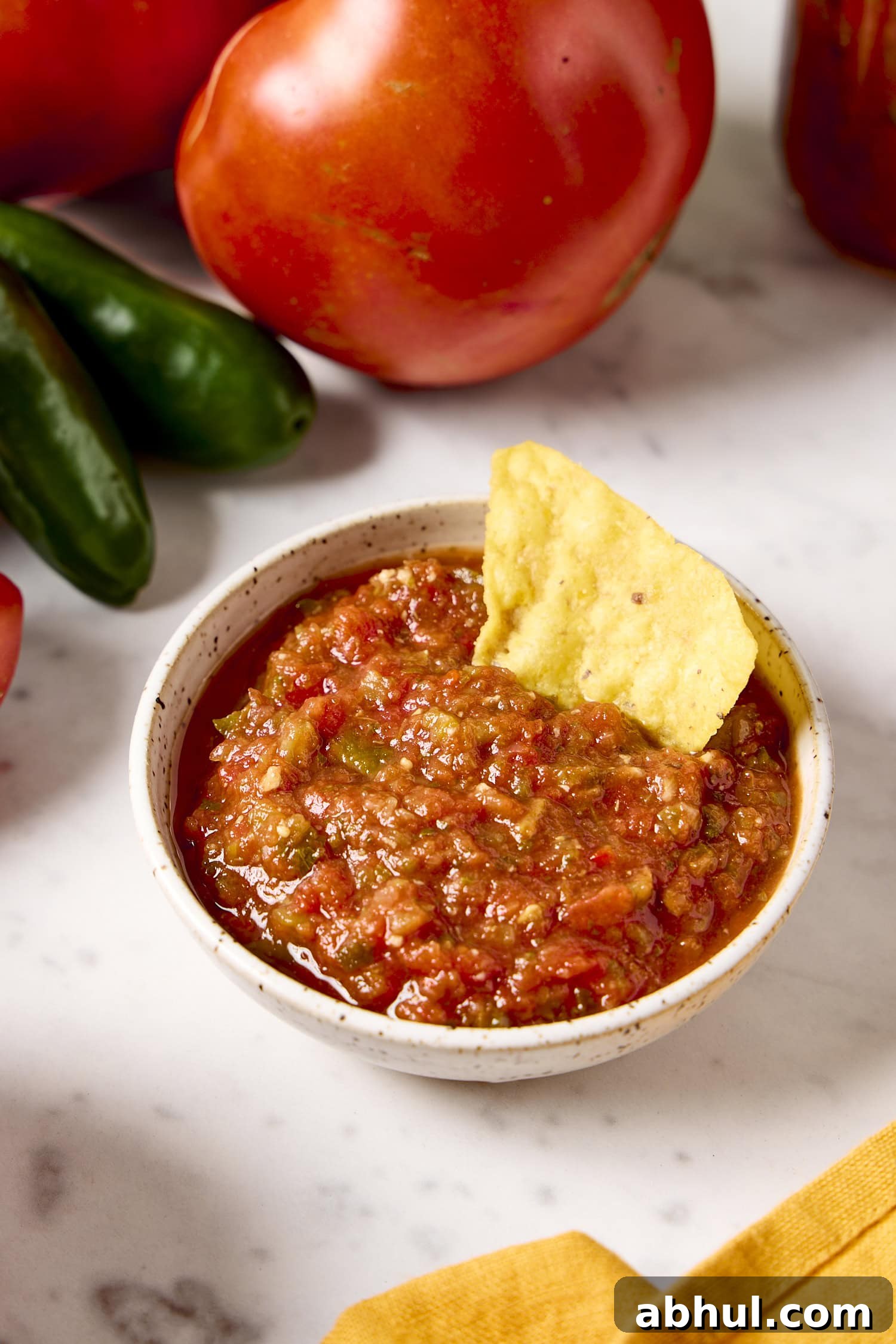
I grew up with home-canned foods, so those familiar summer flavors are part of my kitchen’s foundation. Salsa is one of my favorite preserves. Over time I’ve tuned the recipe to match our tastes exactly. A jar of homemade salsa opened in midwinter brings the bright, ripe flavors of peak-season tomatoes and peppers back to the table—something my mother and grandmother insisted on and that I continue to carry on each year.
This version stands out because the vegetables are roasted first. Roasting deepens sweetness, adds a hint of smokiness, and builds complexity. I balance heat and brightness with a mix of peppers and tomatillos, so the salsa is lively but not overpowering. It works equally well as a chip dip, a topping for tacos, or a finishing spoonful on grilled meats. Each fall I make a big batch and can enough jars to last the winter.
What makes this canned salsa special:
- Deep, developed flavor from roasted peppers and tomatillos
- Spice level is easy to adjust to your preference
- Shelf-stable when canned properly, so you can enjoy summer all year
Food safety tip – Home canning is safe when you follow tested recipes and correct processing times. Improper canning can create a risk of botulism, so if you are new to canning, consult an authoritative canning guide and follow steps for safe acidity and processing.
Canned Salsa Ingredients
Besides tomatoes, this salsa relies on a few ingredients that build texture, acidity, and depth of flavor:
- Tomatoes – The base of the salsa. Peel, seed, and lightly pulse them for the right texture.
- Peppers – Roasting intensifies their sweetness and adds a subtle char. Use a blend of bell and chiles for body and flavor.
- Optional hot peppers (ghost or habanero) – Adds heat if you want it; adjust quantity to control spice.
- Onion and garlic – Foundational aromatics that round out the flavor.
- Tomatillos – Provide bright acidity and a slightly tart note that lifts the salsa.
- Cilantro, cumin, and salt – Freshness from cilantro, warmth from cumin, and salt to balance.
- Distilled white vinegar (5%) – Important for both flavor and safe preservation; use 5% vinegar to ensure proper acidity.
- Tomato paste (optional) – Helps thicken the salsa and adds a bit of concentrated tomato flavor.
The exact amounts are listed in the recipe card below.
How to Make Canned Salsa
This recipe is straightforward once you have your ingredients prepped. The process centers on roasting, cooking down, and canning carefully:
Cook the salsa – Peel and seed the tomatoes, then pulse them briefly in a food processor. Roast peppers and tomatillos until softened and lightly charred, then pulse with garlic until chunky. In a large, heavy-bottomed pot combine the processed tomatoes, roasted peppers and tomatillos, onion, cilantro, any hot peppers you’re using, garlic, vinegar, cumin, and salt. Bring to a boil, then reduce to a simmer and cook for 25–40 minutes, stirring occasionally, until the mixture has reduced and thickened. If you prefer a thicker salsa, stir in up to 12 ounces of tomato paste and simmer another 5 minutes.
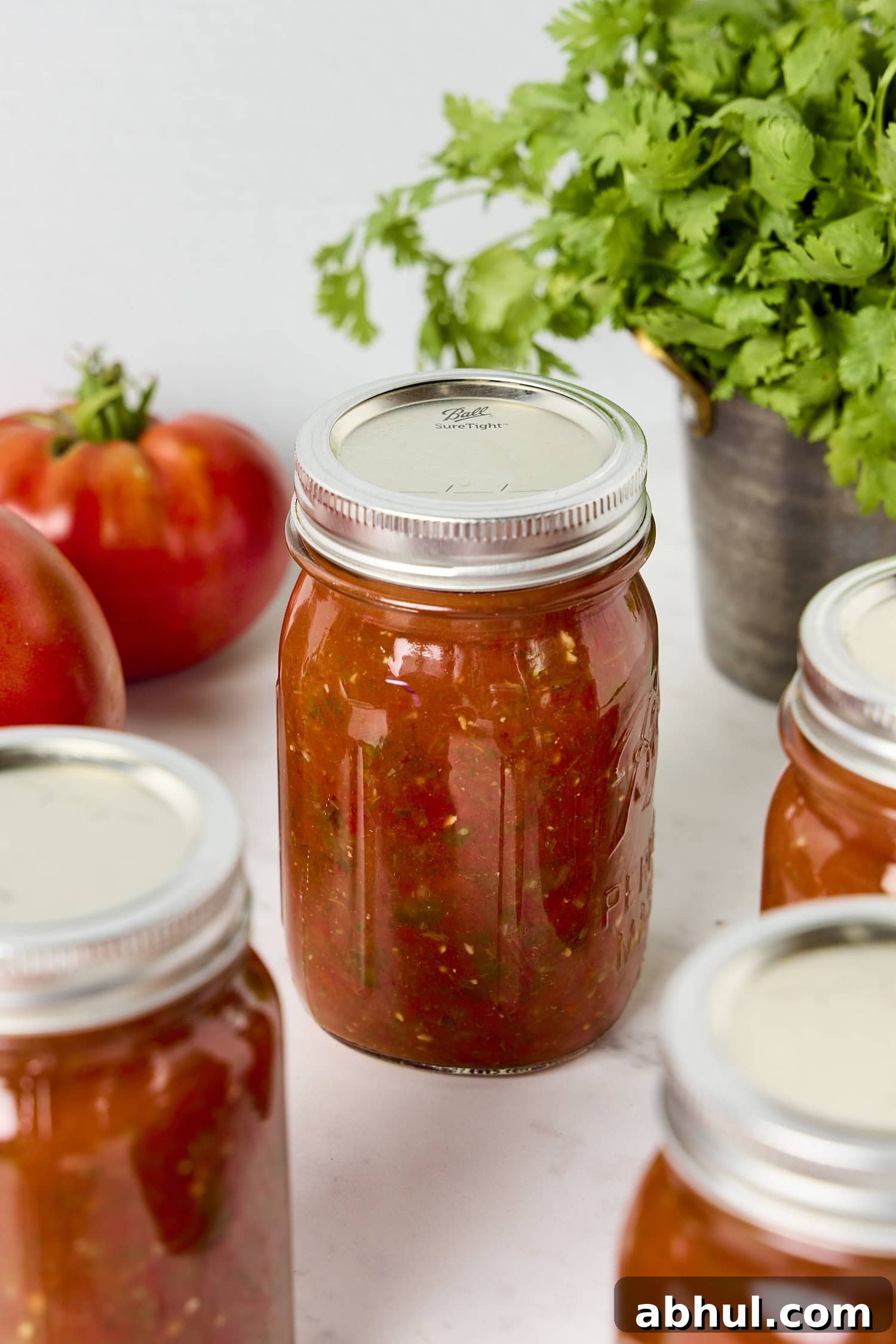
Fill the jars – Ladle the hot salsa into sterilized pint jars, leaving 1/2 inch of headspace. Wipe rims clean, then apply lids and screw on rings until fingertip-tight.
Water bath processing – Process jars in a boiling water bath for the recommended time for your elevation (see times below). Remove jars carefully and let them cool, undisturbed, for 12–24 hours. Confirm each jar is sealed before storing.
Processing Times by Elevation
Processing time depends on elevation. Typical guidance for pint jars is:
| Elevation | 0 to 1,000 ft | 1,001 to 6,000 ft | 6,001 ft + |
|---|---|---|---|
| Process Time (pints) | 15 minutes | 20 minutes | 25 minutes |
Frequently Asked Questions
Roasting concentrates flavor and adds smoky, caramelized notes that deepen the salsa’s profile. Tomatillos benefit from roasting because it softens their texture and mellows their tartness while adding complexity.
Yes. Removing skins and seeds reduces excess water and prevents a thin, watery salsa. Pulsing peeled tomatoes gives a consistent, slightly chunky texture.
Green tomatoes can be used, though the flavor and acidity will differ slightly. Keep the total volume similar to maintain the recipe’s balance and safety.
For safe home canning, use the specified distilled white vinegar (5%). Lime juice does not reliably provide the same consistent acidity required for safe shelf-stable preservation.
Yes. This recipe is written for a water bath because vinegar raises acidity, but you can use a pressure canner if you prefer. Always follow safe, tested guidelines for pressure canning salsas.
Follow These Tips
Serving
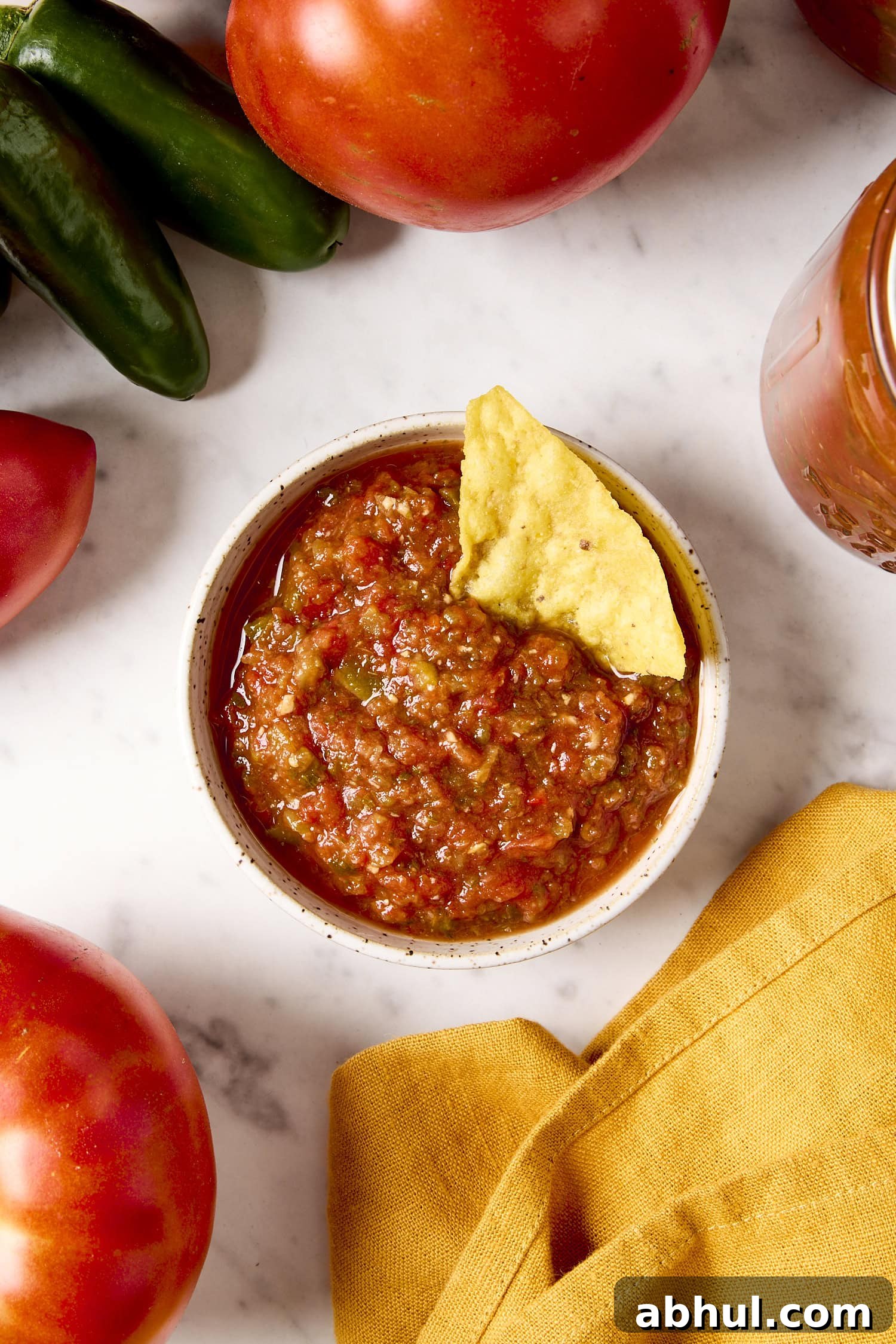
Serve this salsa with tortilla chips, spoon it over tacos, nachos, or grilled meats, or stir it into soups and chili to add fresh, bright flavor. It’s versatile and lifts many dishes.
Storage
Refrigerate: Once opened, keep in the refrigerator and use within about 2 weeks.
Freeze: Freezing is not recommended for canned salsa; the texture tends to degrade when thawed.
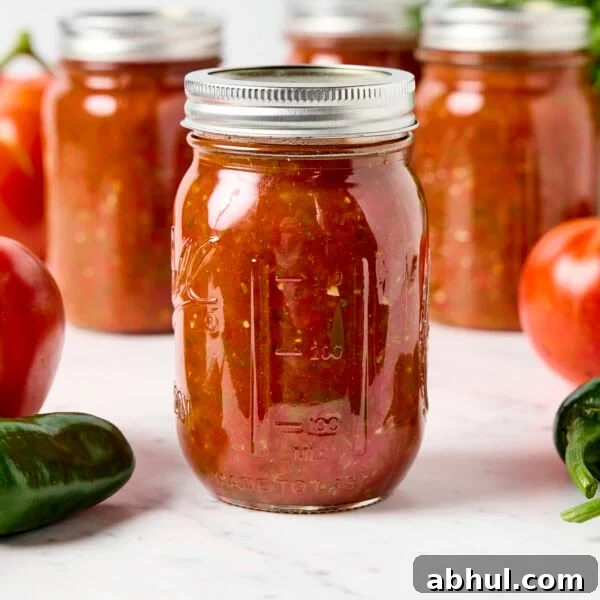
Shelf life: Properly sealed jars store well for 12–18 months in a cool, dark place such as a pantry or basement.
More Preserving Recipes
- French-style cherry jam
- Hot pepper jelly
- Peach chutney
- Strawberry basil preserves
- Peach jalapeño jam
- Canned diced tomatoes
- Refer to a beginner canning guide for more techniques and recipes.
Have I Convinced You to Make This Recipe?
I hope you try this salsa and enjoy the bright, preserved flavors of summer all year long. If you make it, share your experience and any adjustments you made—ratings and comments help others feel confident trying the recipe, too.
Canned Homemade Salsa
Equipment
- Multi-use waterbath canner
- Canning funnel
- Jar lifter
- Regular-mouth lids and rings (12)
- Pint jars (12)
Ingredients
- 16 cups peeled, seeded, and diced tomatoes
- 2 cups roasted and diced peppers
- 1–2 hot ghost or habanero peppers (optional)
- 1 ½ cups chopped onion (about 2 medium onions)
- 2 lb tomatillos, husks removed, roasted and sliced
- 1 cup fresh cilantro, chopped
- 6 cloves garlic
- 1 ¼ cups distilled white vinegar (5%)
- 2 tsp ground cumin
- 2 tsp kosher salt
- 12 oz tomato paste (optional)
Instructions
- Cook the salsa: In a large, heavy-bottomed stockpot combine the prepared tomatoes, roasted peppers, optional hot peppers, chopped onion, roasted tomatillos, cilantro, garlic, vinegar, cumin, and salt. Bring to a boil, then reduce heat and simmer, stirring occasionally, for 25–40 minutes until the mixture reduces and thickens. If you want a thicker texture, stir in up to 12 ounces of tomato paste and cook 5 more minutes.
- Add to jars: Remove from heat and ladle the hot salsa into sterilized pint jars, leaving 1/2 inch headspace. Wipe rims clean and seal with lids and rings.
- Water bath: Process jars in a boiling water bath for 15 minutes at elevations up to 1,000 ft (increase time for higher elevations as noted earlier). Carefully remove jars and cool on a rack for at least 12 hours. Check seals and store in a cool, dark place for up to 12–18 months.
Video
Notes
Food safety reminder: Always follow research-tested canning recipes and the recommended processing times for your elevation. If you’re new to canning, consult an established canning guide and follow directions carefully to reduce the risk of botulism.
Nutrition
Nutrition information is an estimate and should be used as a guideline.

Did you make this? Leave a comment below!