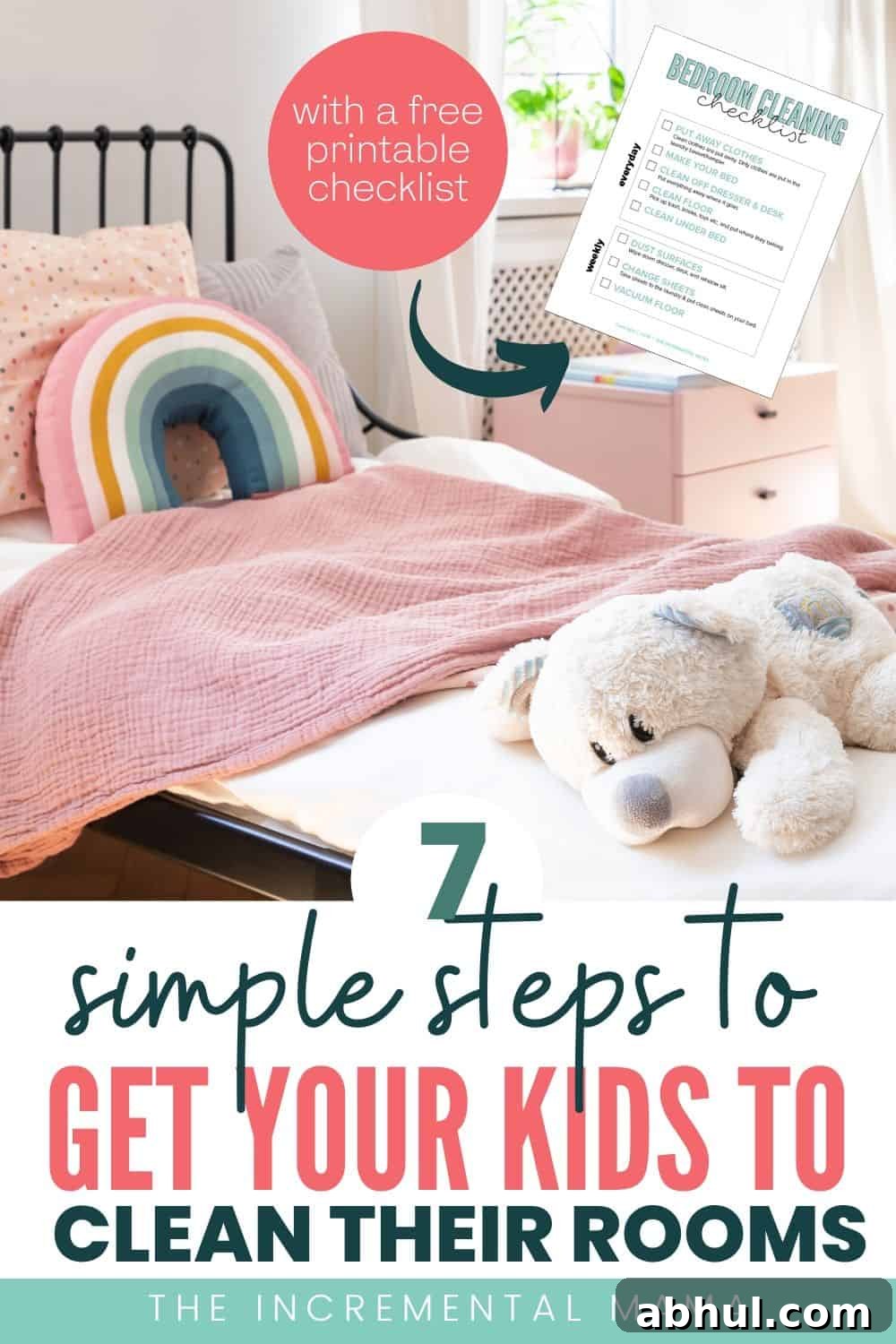
Often it seems easier to clean up yourself than to teach your kids to do it. But children gain a lot from regular chores: research shows that kids who help with tasks like tidying their own bedroom tend to have higher self-esteem and do better as adults.
And let’s be honest: life is a lot simpler when your child can independently clean their room.
Fortunately, teaching a child to clean their bedroom doesn’t have to be complicated or time-consuming.
With a few straightforward steps, you can teach responsibility and save yourself hours down the road. If a child can scatter toys and make a mess, they can learn to put things away.
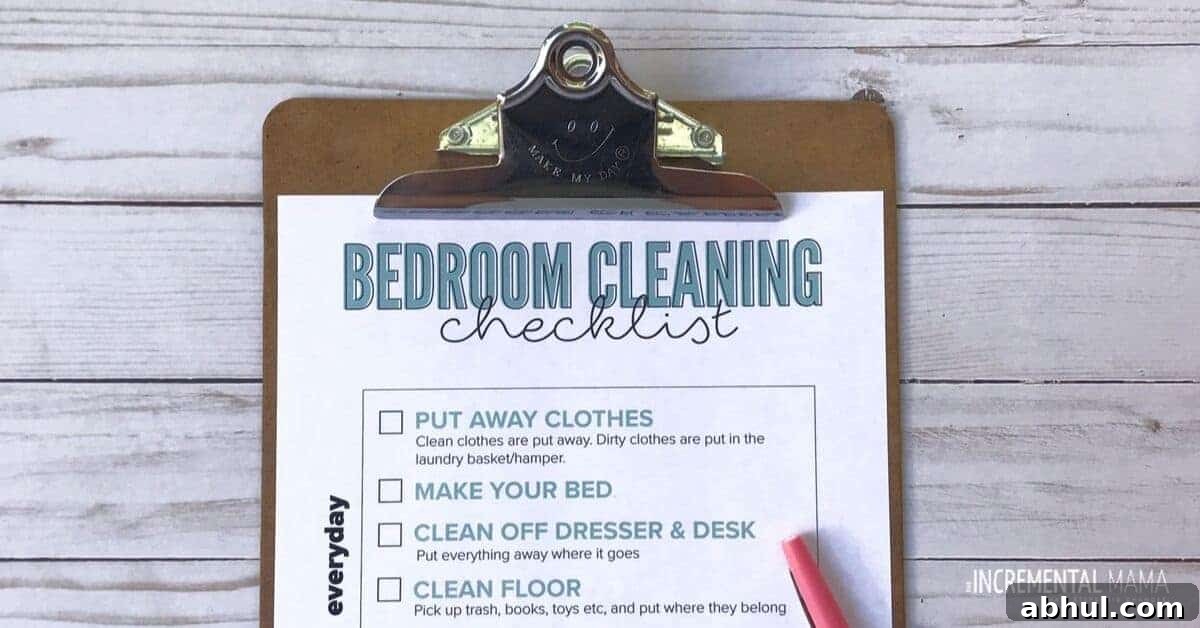
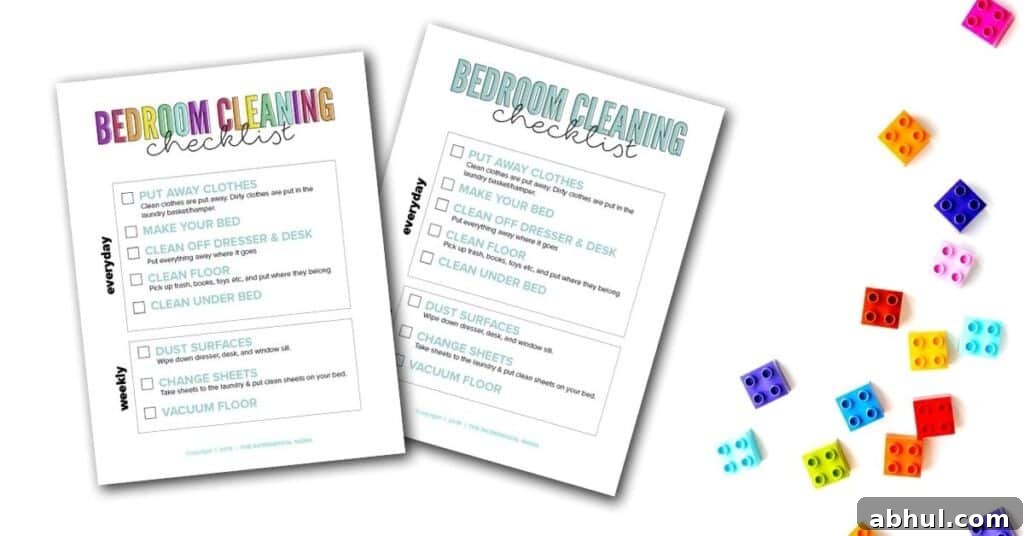
RELATED: Free Printable Bedroom Cleaning Checklist for Kids
WHAT AGE SHOULD KIDS CLEAN THEIR BEDROOM?
Start as soon as a child is able to put things away—often around 18 months. Toddlers are naturally eager to help, and directing that helpfulness toward simple tasks builds habits early. Begin with tiny jobs like returning a toy to its bin, placing dirty clothes in the hamper, or putting a book back on a shelf.
A simple rule: if a child can do something for themselves, they should try. For toddlers and preschoolers, use picture-based chore charts or visual aids to make expectations clear.
Most children are ready to start learning to clean their own rooms. Below are practical steps to make that teaching effective and sustainable.
STEPS TO TEACHING A CHILD TO CLEAN THEIR BEDROOM
1) Make it Easy with Clear Organization
Kids need straightforward expectations and obvious places for everything. For each item, a child should know two things: where it goes and how to put it away.
- Where it goes
- How to put it away
Keep storage low and accessible: low shelves, shallow drawers, and easy-to-reach bins help children succeed. If storage is confusing or high up, expectations will frustrate them.
Before you begin teaching, reorganize the room so every category of item has a clear, reachable home.
Ask yourself:
- Does everything have a clear place?
- Is it easy for my child to reach?
- Is the organization simple?
- What can I change to make cleanup easier?
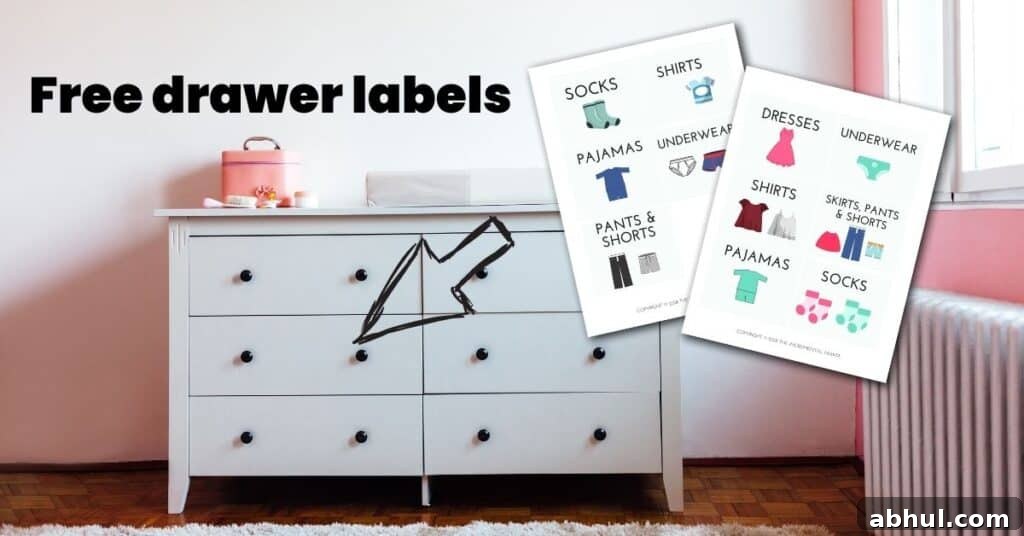
Labels or picture cards on bins and drawers are extremely helpful. For non-readers, picture labels act as a visual reminder of where things belong and dramatically reduce confusion.
For example, if kids frequently leave clothes on the floor, label each drawer with images of the types of clothes that go inside. A short demonstration and consistent prompts often produce quick, lasting change.
2) Model & Praise
Children learn by watching and doing. Show them step-by-step how to put things away while explaining what you are doing. Then invite them to try, giving very specific instructions while making eye contact and offering gentle guidance.
When they complete a task, notice and praise the effort with clear, specific language so they understand exactly what behavior you appreciated.
Examples:
- “Can you put the BLOCK in this BOX?” (Point and guide.) “You did it! That was so helpful!”
- “These are the book shelves. Put the storybooks here.” (Walk with them.) “Great job—thank you for helping!”
Vague commands rarely work. Pointing, guiding, and praising solidify understanding and encourage cooperation. Kids seek attention; giving it for helpful actions reinforces the behavior you want to see.
3) Create a Routine
Children thrive on predictability. If the routine is “parent cleans,” they’ll assume you will always take care of it. Changing that pattern requires a consistent new routine: a regular time when the child is expected to tidy their room.
A reliable routine reduces battles. For many families, cleaning up each evening before bath and bedtime works well: it signals the end of play and prepares the child for the bedtime routine.
Be consistent. Over time children will often clean without prompting because they know it’s what happens every night in order to receive the usual bedtime story or song.
4) Keep it Positive & Encouraging
Negative tones and sarcasm quickly kill motivation. When you stay positive and focus on encouragement, children respond more willingly. Praise specific actions and point out the results—how their help makes life easier or safer.
A simple phrase that works well is: “You (what your child did), so (the result). That was so helpful!” For example:
- “You put your clothes away so you can find them easily. That was so helpful!”
- “You picked up your toys so we won’t trip. That was so helpful!”
Staying upbeat even when you’re tired produces surprisingly good results. Positive reinforcement builds pride and keeps kids engaged.
5) Give Natural Consequences
If toys or items aren’t cared for, natural consequences teach responsibility. One effective approach is temporarily removing items that repeatedly aren’t put away until the child demonstrates consistent care or does chores to earn them back.
Consequences should be fair and related to the behavior so children quickly learn the link between choices and outcomes. Consistent follow-through is essential—if there are no consequences, habits won’t change.
6) Gradually Add Responsibilities
As children master basic clean-up, increase expectations gradually. Move from very specific guidance—“Put that toy here”—to broader instructions—“Put all the toys away” or “Clean this room.”
Once they can handle their bedroom, add other age-appropriate chores: tidying common areas, helping with laundry, or simple tasks in the kitchen. Use the same principles of clear organization, modeling, praise, and consistency for any task.
7) Be Consistent!
Being consistent is the hardest but most important part. If expectations are enforced reliably, children learn that these responsibilities are non-negotiable and long-lasting. Inconsistent enforcement signals that the task isn’t important, and children won’t adopt the habit.
Stick with the system even on tiring days. Over time you’ll have far less to do because you’ve trained your kids to be helpful and independent.
Stay strong—you’re building lifelong skills.
THE STRUGGLE IS WORTH IT
Teaching kids to clean their rooms can be challenging. They may test limits and resist, but the effort pays off. As children gain competence, their pride and excitement when they show you a tidy room are incredibly rewarding.
With patience, clear systems, and consistent expectations, most families see lasting change. You’ve got this—good luck!
ADDITIONAL RESOURCES:
13 Ways to Get Kids Excited About Chores
A Simple Cleaning Schedule You Can Stick To
Printable Chore Chart for 5–6 Year Olds