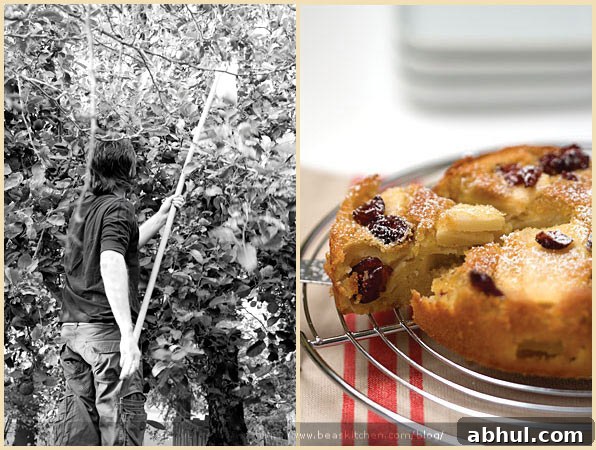
He stood six feet five inches tall with an impressive frame. I remember his gentle smile that would appear even when he was slightly annoyed. I was often told that when I was three he would tease me with his bristly mustache and beard. “Mais ça pique,” I would whisper to my mother each time I was asked to kiss him goodbye. As his only petite-fille, I was his little chouchou.
My grandfather loved the land—la terre. He was a farmer, and from him I inherited my affection for nature. With him I learned to appreciate the scent of hay on a warm summer breeze, the sound of autumn leaves rustling beneath our feet during forest walks, and the thrill of returning home with boots caked in mud after hours spent in rain-soaked fields. My grandmother would scold us when she saw us come back filthy, with his two short Teckel dogs trailing behind; we would grin and feel delightfully complicit when her back was turned.
My grandfather’s name was Henri; he was my father’s father.
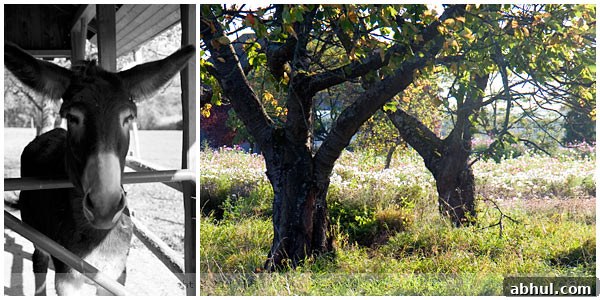
“Il faut que vous veniez cueillir les pommes,” he would say each early September when his Reine des Reinette apple trees were heavy with fruit. Those apples weren’t the prettiest in his orchard, but he protected them fiercely. I quickly grew as fond of them as he was. They signaled homemade tarts and compotes my mother would bake over long afternoons, or thin slices added to fromage blanc with raisins—good reasons for the short ten-kilometer drive from my parents’ house to my grandparents’ farm and their large verger.
The last time I ate reine des reinette was at my brother’s house in October. For an entire weekend he kept urging my sister-in-law and me to pick the apples. “Venez, il faut les cueillir, elles vont pourrir sinon,” he insisted. His insistence made me think of my grandfather. We laughed and called back “plus tard” from the garden where we lounged, but since I rarely find this variety anymore, I was happy to help. La reine des Reinette truly lives up to her name.
Reine des Reinette apples are common in France but uncommon in the United States, to my knowledge. A few weeks ago, Bonnie B. invited me to a special Heirloom Apple event in Boston, and I was excited to learn they would have reine des reinette among many other varieties. The event conflicted with a food styling workshop in L.A., so I couldn’t attend. I asked Bonnie if she could set a few bags aside so my husband could pick them up—and she agreed.
Heirloom apples are usually defined as varieties cultivated for 100 or more years. Often less visually uniform than modern apples, they are prized for their distinct and richer flavors.
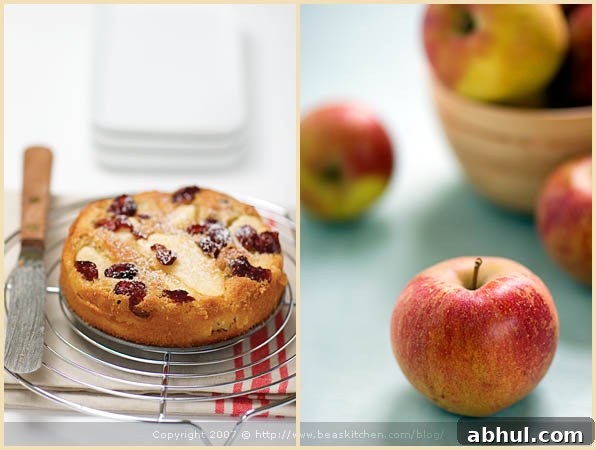
With a smooth, shiny skin, the reine des reinette is one of the finest in the Reinette family. Its color ranges from golden yellow when ripe to orange-red on fruit exposed longer to the sun. The flesh is pale, slightly tart, yet sweet and juicy. Excellent eaten raw, it becomes even more compelling when cooked in stews or tarts. Harvested from September to late October, it stores well for several months if kept cool.
In pomological terms, the name Reinette signifies excellence. The term has been used for centuries—Charles Estienne, a horticulturist, mentioned it as early as 1540.
Reinette Grise du Canada
Reinette du Mans
Reinette de Caux
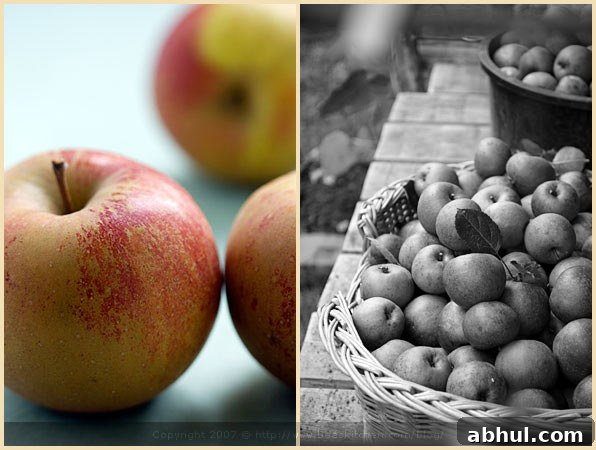
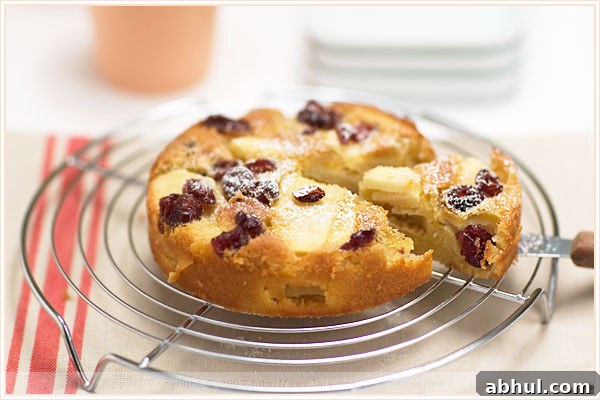
“Où sont les pommes ?” I asked P. as soon as I walked in the door last Monday night, just back from the airport. “Elles ont l’air bonnes,” he had told me on the phone when I inquired, and I worried he might forget to pick them. They were just as I remembered—familiar and comforting, yet oddly foreign since it was my first time seeing reine des reinette in the United States. I ate the first one raw, savoring each juicy bite and silently hoping my two bags would last forever. The next day I baked a cake, keeping it simple so the apple flavor would shine.
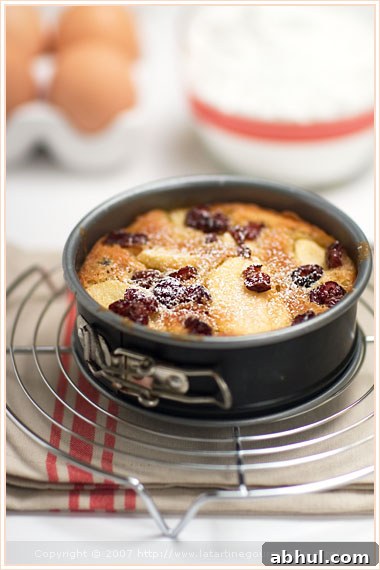
The resulting cake is moist and dense, almost like a thick apple crêpe rather than a high-risen cake. Picture layers of apple enveloped in a lightly cooked, sweet batter. I used quinoa and brown rice flours to make it gluten-free, but regular white flour works well as a substitute if needed.
“Y’a encore du gâteau que tu as fait hier ? J’ai un petit creux,” P. asked. There wasn’t any left—of course not—but I was already eager to bake another. La reine des reinette is my queen apple, and I knew my grandfather and brother would have enjoyed a slice. They both understood that this apple never disappoints.
You need:
- 3 large Reine des Reinette apples
- 2 oz dried cranberries (soaked in hot water for 20 minutes)
- 3 eggs
- 7 Tbsp butter, melted
- 1 tsp baking powder
- 1/2 tsp fleur de sel
- 3 Tbsp quinoa flour (about 25 g)
- 5 Tbsp brown rice flour (about 50 g)
- 1/3 cup + 1 Tbsp light brown sugar
- 1/4 tsp ground cinnamon
*Substitute regular white flour if quinoa and brown rice flours are unavailable.
Steps:
- Sift the flours with the baking powder and set aside.
- Soak the cranberries in hot water for 20 minutes, then drain.
- Peel the apples, core them, and slice thinly.
- Preheat the oven to 350°F (180°C).
- Beat the eggs with the sugar and fleur de sel until light and airy.
- Add the melted butter and the dry ingredients; mix briefly until combined.
- Fold in the apple slices.
- Butter a 9.5″ round mold and pour in the batter with apples.
- Top evenly with the cranberries.
- Bake for 30 to 35 minutes. Let cool a few minutes before unmolding. Serve lukewarm for best flavor.
Ingrédients :
- 3 belles pommes Reine des Reinette
- 50 g de canneberges séchées (trempées dans de l’eau chaude pendant 20 minutes)
- 3 œufs
- 100 g de beurre fondu
- 1 càc de levure chimique
- 1/2 càc de fleur de sel
- 25 g de farine de quinoa*
- 50 g de farine de riz complet*
- 60 g de sucre de canne brun léger
- 1/4 càc de cannelle en poudre
*Remplacez par de la farine blanche si vous ne trouvez pas ces farines.
Étapes :
- Tamisez les farines et la levure, mettez de côté.
- Trempez les canneberges dans de l’eau chaude pendant 20 minutes, puis égouttez.
- Pelez les pommes, évidez-les et coupez-les en fines tranches.
- Préchauffez le four à 180°C.
- Battez les œufs avec le sucre et la fleur de sel jusqu’à obtenir une préparation légère.
- Ajoutez le beurre fondu, puis les ingrédients secs. Mélangez brièvement pour homogénéiser.
- Incorporez les tranches de pommes.
- Beurrez un moule de 24 cm et versez-y la préparation.
- Répartissez les canneberges sur la pâte.
- Enfournez 30 à 35 minutes. Laissez reposer quelques minutes avant de démouler. Dégustez tiède.