What Rice Does Instead of Egg
The key is one word: starch. When rice simmers for a long time in hot milk, the grains swell and release amylose, which thickens the liquid. This gelatinization gives body to the base, functioning much like an egg yolk does in a classic custard ice cream. Rice therefore acts as a binder, eliminating the need for eggs entirely.
This technique is familiar in Italy. Sicilian gelato can be made without eggs using cornstarch, while Florentine gelato di riso relies on arborio rice. By absorbing free water, the starch also limits the formation of large ice crystals, which explains the smoother mouthfeel.
The remainder of the creaminess comes from full-fat cream (30% fat), which provides a rich, fatty softness. Sugar lowers the freezing point, preventing the ice cream from becoming a hard block. This rice-based frozen dessert is not new; it’s a long-established cousin of gelato di riso and the Indian kulfi.
Ingredients for Rice Ice Cream
- 120 g round rice
- 1 l whole milk
- 120 g light brown sugar
- 2 vanilla pods (or 2 tsp natural vanilla extract)
- 1 pinch of salt
- 25 cl full cream (minimum 30% fat)
Steps: From Rice Pudding to Ice Cream
- Start with a quick rinse of the rice under cold water to remove surface starch.
- In a large saucepan combine the drained rice, milk, sugar, and salt. Split the vanilla pods lengthwise, scrape the seeds with a knife, and add both seeds and pods to the milk.
- Cook over very low heat, just below simmering, and let the rice soften for 35 to 40 minutes; stir occasionally until the mixture is thick and creamy.
- Remove from the heat, discard the vanilla pods, and let it cool slightly. Add the very cold cream and blend thoroughly with an immersion blender until no grain remains under the blade.
- Cover and chill the base in the refrigerator for at least two hours.
- If you have an ice cream maker, churn the mixture until it reaches a soft, ribbon-like consistency. If not, spread the base in a wide, shallow container and stir it with a fork every half hour for about 3 hours to break up ice as it forms.
No Ice Cream Maker? The Fork Trick to Prevent Crystals
This is where technique matters if you don’t own a machine. Place the chilled base in a flat, wide tray so it freezes from the edges inward. Every 30 minutes, remove the tray and vigorously break the frozen layer with a fork, bringing the edges toward the center. Repeat for about 3 hours, roughly five or six turns.
The goal is to control crystal size. Without agitation, water forms large crystals that give a crunchy sensation. By regularly breaking up the mass you fragment those crystals and incorporate a little air, producing a smoother result. Don’t expect the exact lightness of churned ice cream—home-made rice ice cream will be honest and slightly denser.
For storage, plan on 1 to 2 weeks of optimal texture in an airtight container with plastic wrap touching the surface. After that, freezer flavor may develop since this recipe contains no stabilizers. Remove the ice cream a few minutes before serving so it softens slightly.
Variations and Serving Suggestions
The vanilla base is a starting point. Try whisking in a spoonful of matcha for a green, slightly bitter version, or swap part of the milk for coconut milk and cream for a tropical twist. Black sesame blended into a paste also makes an unexpectedly delicious, almost gray ice cream with toasty notes.
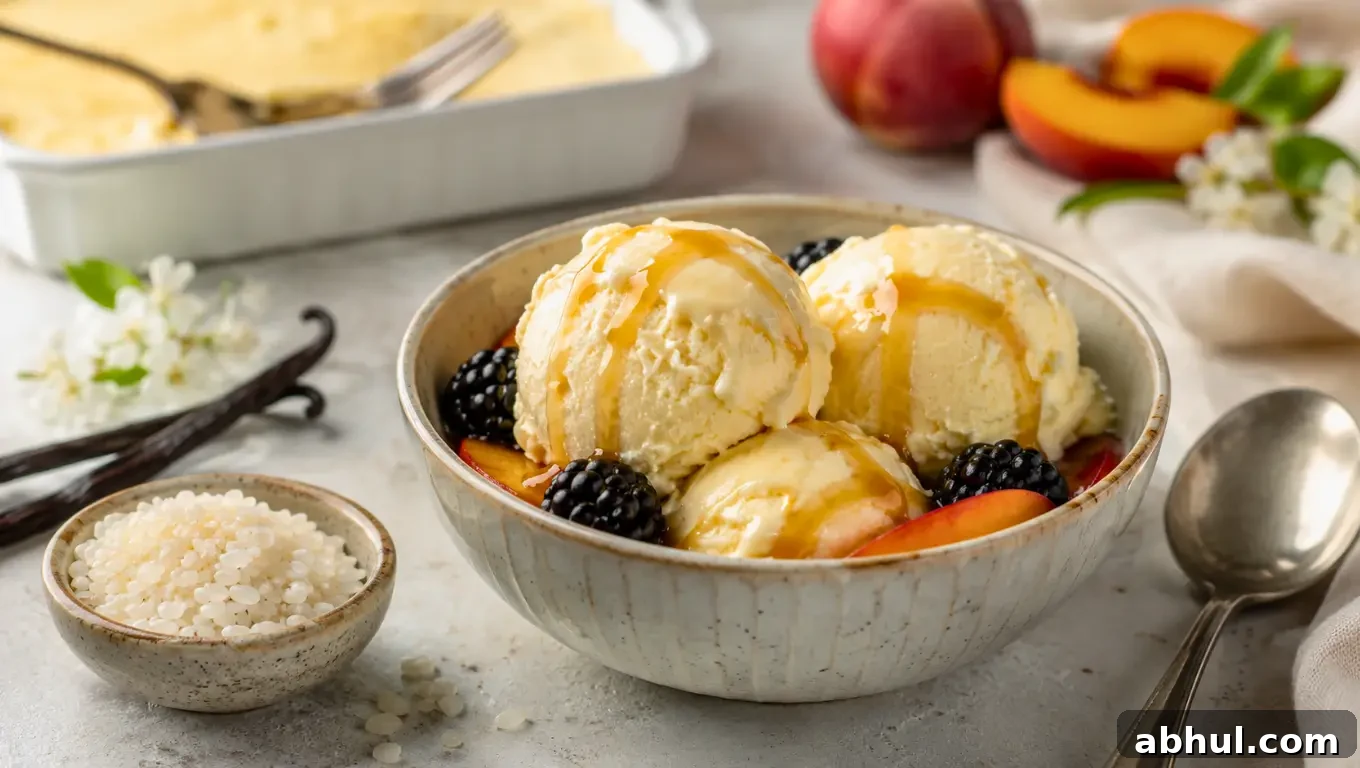
When serving, a drizzle of caramel over a scoop always impresses. In summer I prefer to pair it with seasonal fruit: quartered figs, nectarine slices, or bursting blackberries. It’s an easy way to enjoy refreshing dessert without investing in a machine.